
A warning to every American 55 and over, before your next doctor's visit ends with the words "have you considered Aricept?"

In 2012 a citizen advocacy group sued the FDA over a 23-milligram dose of a memory pill that the FDA's own medical reviewers had recommended against approving. The division director overrode them — just months before the patent on the 10-milligram dose was set to expire. Today that pill costs about $400 a month, runs about a 35.7% nightmare rate in the trials, and — confirmed by 2024 meta-analyses — does not change the course of the underlying decline.
Meanwhile, on a Han-Dynasty Chinese scroll buried in a temple, on a 1986 Nobel Prize certificate hanging on a wall at Washington University in St. Louis, and in a 49-week double-blind trial published in Frontiers in Aging Neuroscience, the answer that doesn't make anybody rich has been sitting in plain sight the whole time.
This letter is the first time anyone has put the three of them on the same page for you.
A man I'll call Bill walked into his GP's office in Scranton, Pennsylvania on a Tuesday morning about four years ago.
He was seventy-one.
He had spent thirty-eight years on the railroad. He could still rebuild the carburetor on his '72 Mustang from memory.
That morning, his wife Rose drove him in. She had to. Because Bill could not remember the route to the doctor's office he had been driving himself to for fifteen years.
The doctor took eleven minutes.
He asked Bill the date. He asked him to draw a clock on a piece of paper. He asked him who the president was.
And at the end of the eleven minutes, the doctor pulled out his pad and wrote a prescription for a small white pill that costs about $400 a month at the brand-name level, and said the eight words every American family in this position eventually hears:
That was the beginning of nine of the worst months of Rose Harrington's marriage.
The pill gave Bill nightmares so vivid he started fighting his own sheets at three in the morning. It gave him leg cramps that knotted his calves until he cried into the kitchen towel his wife handed him at 4 a.m. He lost fourteen pounds he could not afford to lose. His heart rate ran so slow that the second doctor in this story wrote him a referral to a cardiologist for the side effects of the pill the first doctor had written him for the memory.
And here is the part of this letter that I — my name is Mark Edwards, I am the founder of a small company in Orlando, Florida, and I am not a doctor — am writing to you tonight, before anything else, to say out loud:
It was never going to work. A meta-analysis published in 2024 confirmed, again — for the fourth or fifth time in twenty years — that the drug class Bill was put on does not alter the underlying course of cognitive decline. It slows the breakdown of a neurotransmitter that is already in short supply. It does not grow a single new neuron. The moment you stop, the slope resumes.
And here is the part that, frankly, I am still angry about as I write this to you.
In 2010, the manufacturer of that pill applied to the FDA for approval of a higher, 23-milligram dose — just months before the patent on the 10-milligram dose was set to expire. The FDA's own medical reviewers — both the clinical reviewer and the statistical reviewer — recommended against approving it. The division director overrode them. Public Citizen, the consumer advocacy group founded by Ralph Nader, sued the FDA in September 2012 over that decision. The 23-milligram dose went on the shelves of every American pharmacy anyway — at the price tag still sitting on Bill Harrington's monthly statement.
I will spend the next several pages walking you through what is happening inside your brain right now — the protein you stopped making at fifty, the Italian woman who won a Nobel Prize for finding it on American soil at Washington University in St. Louis in 1986, the forty years of peer-reviewed research nobody on the evening news has read for you — and why your doctor has, almost certainly, never said the name of it out loud in your presence.
But first, I need to tell you what Bill Harrington's wife did six months after she tapered him off that pill.
And I need you to understand, before I do, that she is not a doctor either.
She is a sixty-eight-year-old woman from Scranton who did what conservative American grandmothers do when the medical establishment fails their husbands.
She did her own damn research.
And about ten pages from now — after I have walked you through the science, the scandal, the Nobel Prize, the 49-week peer-reviewed trial in Frontiers in Aging Neuroscience, and the 2,000-year-old Han-Dynasty answer the four-minute doctor's visit will never get around to telling you about — I am going to introduce you to the small bottle Rose Harrington put on her kitchen table at the end of that research.
For $0.97 a day. With 60 days to test it and decide.
But first, please, turn the page.
Because before you can decide what to do about any of this, you need to hear from me, plainly, that what you have been noticing this past year is not what your mother had.

I see you.
I see you at 2:14 in the morning. The lamp on the nightstand is off. The phone is in your hand. You typed something into the search bar. Seven words. Maybe six. Maybe nine. I am not going to write them. You already know them. If you are reading this letter, you have either typed them — or you are one bad afternoon away from typing them.
I see you in the kitchen last Tuesday. You walked in from the hallway with the coffee mug in your hand. The back door was open three inches because you had been letting the cat in. The light over the sink was on. And for the longest seven seconds of your week, the whole reason your feet had carried you into that room was simply… gone.
You laughed it off. We all do. But the laugh did not reach your eyes.
I see you at the Sunday dinner table. Your daughter-in-law was telling the story about the kindergarten teacher. You were trying to tell the part about the dog at the lake. And the word would not come. You knew the word — a small word, a common word, the kind you would use eight or nine times in an ordinary conversation. And for a long, hot, publicly humiliating half-second, in the middle of your own family, the word would not come. Your daughter-in-law smiled and filled it in. You went quiet for the rest of the meal.
I see you at 2 p.m. in your own living room — the wet-sweater fog that did not exist at fifty, lowering over the hour that used to be your sharpest. You tell your spouse you are just tired. You have been saying just tired for four months.
I see you at the bank counter, asked for the zip code you have lived inside since 1981, the half-second pause before the numbers arrived.
I see you at the senior-center bingo table, looking at the waitress's name tag and looking at her face, the connection refusing to lock.
I see you in the parking lot of the Walgreens, standing with the bag, for a long forty-five seconds not remembering which row you parked in.
I see you at the breakfast table when your spouse said, with no malice in it at all, "Honey… you've already told me that."
And I see the silent calculation you have been doing in the dark for the last six months — the one you have not put into words even to yourself:
I am going to say this to you now. Plainly. Without dressing it up.
It is not in your head. It is not anxiety. It is not the second glass of wine on Tuesday. It is not the year you turned sixty. It is not the year you turned seventy.
And it is also, I promise you on my late father's name, not the beginning of what took your mother.
What you have been telling yourself — what every American 55 and over has been told by every doctor's office and every aging-parent magazine for forty years — is what I am going to call, for the rest of this letter, the three Quiet Lies.
Quiet Lie #1 — The Aging Lie. "This is just what happens. It happened to my father. It will happen to me. There is nothing to be done about it."
Quiet Lie #2 — The Inheritance Hoax. "My mother had it, so I am next in line. It is in my genes. It was decided in 1947 in the maternity ward, and I am just the one watching it arrive."
Quiet Lie #3 — The Just-Tired Cover Story. "I'm just tired. I'm just stressed. I'm just out of routine. I'll snap out of it in the spring."
I have lived inside the first two of those lies myself. I will get to that in a few pages, when I tell you about my father. I have heard the third one from every customer letter that has ever come into my office in Orlando. Just tired is the cover story your generation has been carrying around for ten years to keep your spouse from asking the harder question.
All three are wrong. All three are about to be named, and refuted, in this letter. By the time you turn the last page, you will know — with peer-reviewed evidence, in plain English, with named scientists and dated journal citations — why each of them is a lie.
It is something else entirely.
It has a name. There is a reason for it. There is forty years of peer-reviewed science behind that name. There is a Nobel Prize, awarded on American soil, that named the disease this discovery was expected to help treat — in the citation itself, in front of the king of Sweden, in 1986.
And there is a quiet 2,000-year-old answer that the pharmaceutical industry has been unable to put a patent on, the four-minute doctor's visit has been unable to find the time for, and the Newsmax-Hannity-Levin audience this letter is written for has, almost certainly, never been told about.
Until now.
I want you to keep reading.
Not because I am trying to sell you something. I am — I'll get to that — but not yet, and not first.
I want you to keep reading because nobody else has put these facts on the same page for you. And I think the next eleven pages are going to do for you what they did for Bill Harrington's wife.
So pour the coffee again. It went cold three pages ago. I will wait.
And then turn the page.
Because I am about to tell you, in plain English, what happened to your brain the year you turned fifty — and why your doctor never mentioned it.

In May of 2011, a Harvard-trained physician named Sidney Wolfe, who had spent forty years running the Health Research Group at Public Citizen — the same nonprofit Ralph Nader founded in 1971 — sat down at a desk in Washington, D.C. and wrote a fifteen-page petition to the Food and Drug Administration.
The petition asked the agency to do one specific thing. Pull the 23-milligram dose of Aricept off the market.
Not Aricept entirely. Just the high dose. The one that had been quietly approved a year earlier. The one that, according to the manufacturer's own clinical-trial data, produced only marginal additional benefit over the standard 10-milligram dose, at substantially higher rates of nausea, vomiting, weight loss, syncope, and the slowing of the heart.
The petition cited the FDA's own internal review.
Because here is the part nobody on the evening news ever told you.
Inside the FDA, when the 23-milligram application came across their desks in 2010, two of the agency's own scientists recommended against approving it. The clinical reviewer — the physician whose job is to evaluate medical appropriateness — recommended against. The statistical reviewer — the scientist whose job is to evaluate the trial data — recommended against.
These were not outside critics. These were not anti-pharma activists. These were the FDA's own career civil servants.
And both of them said: do not approve the 23-milligram dose.
The Division Director — one person, one signature, one administrative decision — overrode them.
The drug was approved.
Now look at the calendar. The 23-milligram dose was approved in July of 2010 — exactly fifteen months before the patent on the 10-milligram dose was set to expire. The patent on the original Aricept ran out in November 2010. The moment that patent expired, generic manufacturers were free to come in and undercut Eisai and Pfizer.
Which would have been the end of the toll booth.
Except now, instead of one Aricept, there were two. And only the 23-milligram was still under patent. Which meant Eisai and Pfizer could keep collecting brand-name money on the new dose for years longer.
A new dose. Marginal additional benefit. Substantially more side effects. Approved over the objection of the FDA's own reviewers. Just in time to extend the patent monopoly.
Public Citizen petitioned the FDA in May 2011 to reverse the approval. The FDA sat on it for sixteen months. On September 5, 2012, Public Citizen sued the FDA in federal district court to force action.
The FDA eventually rejected the petition.
The 23-milligram dose remains on the shelves of every American pharmacy as I write this letter. Every month, hundreds of thousands of American families pay between $400 and $600 cash, retail, brand-name, for a pill that the FDA's own scientists said should not have been approved.
I want you to sit with that for a moment.
Because the question is not "are you being told the truth by the pharmaceutical industry."
The question is: which truth has the pharmaceutical industry decided you are allowed to hear?
This is the part that is harder to forgive.
A meta-analysis published in 2024 in Frontiers in Neuroscience analyzed twenty-plus years of trials on the drug class Bill Harrington was put on. The conclusion was not new — it had been published four or five times before. The 2024 paper just put it in plain English one more time.
Read that sentence twice.
Aricept does not grow a single new neuron. It does not regenerate a single millimeter of myelin sheath. It does not preserve a single brain cell that was on its way to being lost. The manufacturer does not claim it does — read the fine print, the part in 7-point type at the bottom of the page — and the FDA never approved the drug for those purposes.
What Aricept does is this. There is a chemical in your brain called acetylcholine — the chemical of focus and attention. As certain forms of cognitive decline progress, you have less of it in circulation. Aricept does not make new acetylcholine. It slows down the enzyme that breaks acetylcholine down, so the small amount you have left lingers a little longer in the gap between your neurons.
That's it. That is the entire mechanism of the $400-a-month pill.
It does not pump water back into the bay. It just slows the rate at which the bay drains. And the moment you stop taking it, the decline resumes.
Aricept buys time. It does not buy the man your wife married. It does not buy the route home Bill Harrington forgot. It does not buy the granddaughter's name. It buys time.
And in exchange for that time, the manufacturer's own clinical trials reported this: 35.7% of patients on the drug — versus 3.4% on placebo — reported nightmares so severe they were classified as a formal adverse event.
More than one in three.
That is Bill Harrington fighting his own sheets at three in the morning.
The FDA's own Adverse Event Reporting System lists, as the single most-reported adverse event for this drug class, bradycardia — a slow heart rate. 739 cases. The third most-reported is syncope — fainting. 511 cases. (Frontiers in Neurology 2025 FAERS analysis.) The drug your GP just prescribed your seventy-one-year-old husband for his memory has, as its number-one real-world adverse event, the slowing of his heart. And as its number-three real-world adverse event, fainting — which in a seventy-one-year-old man is a very fast road to a hip fracture, which carries a one-year mortality rate you can look up in any medical library and will not enjoy.
The FDA's own warning label tells you, in writing, that this drug has "vagotonic effects on the sinoatrial and atrioventricular nodes" — clinical language for the drug slows your heart. It tells you the drug can cause "bradycardia or heart block in patients both with and without known underlying cardiac conduction abnormalities" — clinical language for even if you've never had a heart problem, this can cause one. It tells you the drug causes "nausea, vomiting, diarrhea … may lead to weight loss" — clinical language for we can make your elderly father lose pounds he cannot afford to lose.
It is all there in writing. The manufacturer has disclosed it. The fine print at the bottom of the prescribing information is, in many ways, the most honest document in the entire $400-a-month Aricept transaction.
And nobody reads it.
Because the GP, with his eleven minutes and his pad, says "Have you considered Aricept?" and the family says yes — what else are they going to say? — and the prescription gets filled, and the bottle goes on the kitchen counter next to the blood-pressure pills and the cholesterol pills, and the side effects start arriving like an unwanted parade, and nobody has told the family one critical fact.
There is a separate body of science. Forty years old. Award-winning. American-soil. Peer-reviewed. That points to an entirely different way of thinking about this whole problem.
And the reason the family was never told is, in fact, embarrassingly simple.
Your doctor is not a villain.
He is a working professional with a calendar, a billing software, and a continuing-medical-education curriculum that is, very often, sponsored by the pharmaceutical companies whose drugs he is then going to prescribe to you. When he sees a patient with the first quiet signs of cognitive decline, his training tells him to run the in-office tests, refer for the MRI if anything looks alarming, and write the only prescription his continuing-education credits have ever put in front of him.
That prescription is Aricept.
He is not lying to you. He is doing the only thing his system rewards him for doing.
Now ask yourself one question.
Has your doctor — at any point in ten years of routine visits — ever sat across the desk and said, in plain English: "There is a specific protein your brain stopped manufacturing in adequate quantities the year you turned fifty. An Italian-American woman won the Nobel Prize for discovering it in 1986. The Nobel committee's own citation named senile dementia as one of the diseases the discovery was expected to help treat. Forty years of peer-reviewed studies are sitting on PubMed. Do you want a one-page summary?"
No.
Of course he hasn't.
And the reason is embarrassingly simple. The protein cannot be patented.
There is no continuing-education seminar on it. There is no glossy brochure in your doctor's break room. There is no drug-rep with a pasted smile and a tray of catered sandwiches showing up at lunchtime. There is just the science — sitting in the medical-school library, cited eleven thousand times, quoted by the Nobel committee in front of the king of Sweden, and invisible to the eleven-minute office visit.
That is not a coverup. It is the predictable consequence of a system that pays doctors to prescribe what can be patented, and ignores what cannot.
And it has cost your generation forty years of access to a piece of science that should have been on the inside flap of every AARP magazine since 1986.
Let me tell you what the science is.
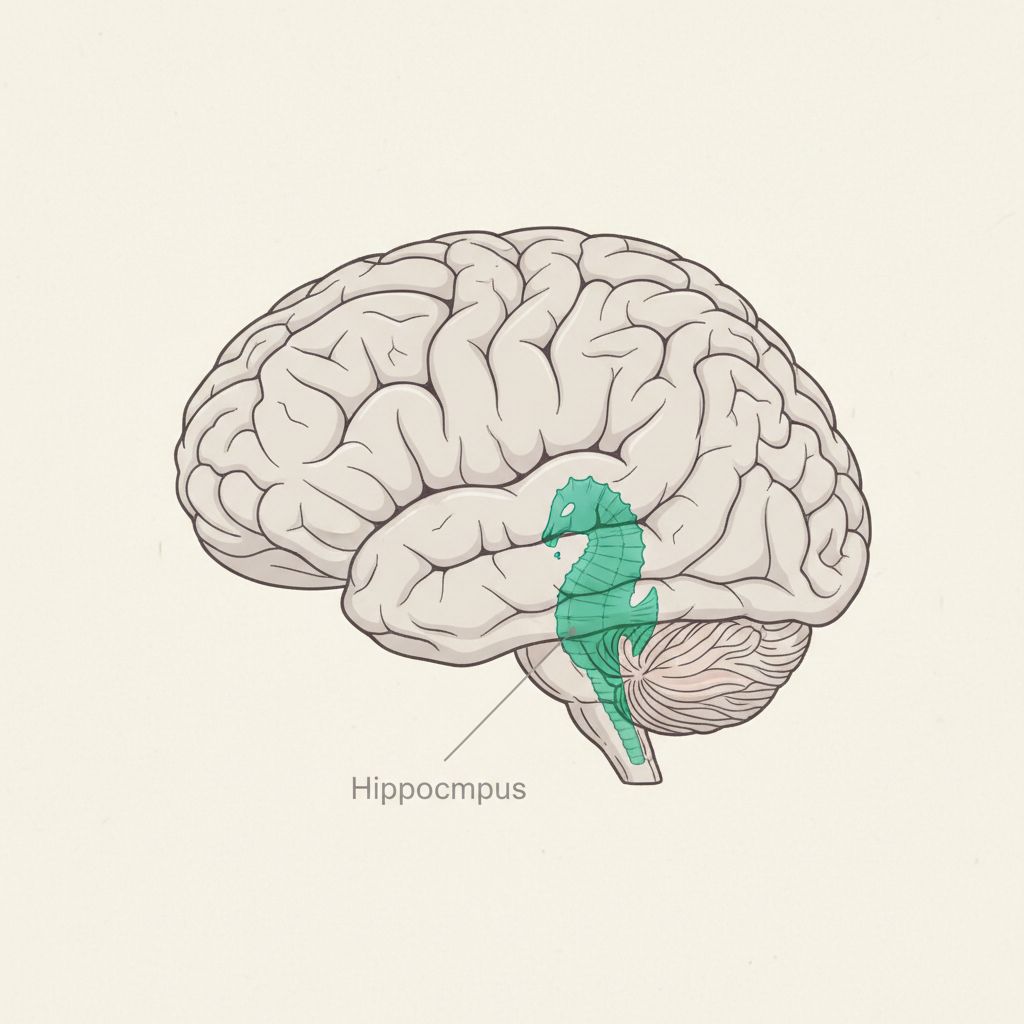
Inside your skull right now, somewhere between your eyebrows and the back of your head, there is a network of roughly 86 billion neurons.
Each of those neurons has an arm, called an axon, that reaches out and connects to other neurons. Those connections are the physical substrate of every memory you have ever made. The name of your first-grade teacher. The smell of your grandmother's kitchen. The way the door of the first car you ever bought sounded when you closed it. Every single one of those is stored as a pattern of connections between neurons. The patterns are real. They are physical. They are yours.
For the connections to work, the axons need to be insulated. The insulation material is called myelin sheath. If you imagine the axon as the copper wire inside a lamp cord, the myelin sheath is the plastic insulation wrapped around the copper. Without the insulation, the signal leaks. Without the insulation, the lamp does not turn on cleanly. Without the insulation, the message your brain is trying to send — the granddaughter's name — gets to the destination late, garbled, or not at all.
The insulation wears down. That is normal. It has been wearing down on every human being who has ever lived since the species began. It wore down on your grandfather. It will wear down on your grandchildren.
What is also true — and what is not normal — is the body's response to the wear.
Your brain has a maintenance crew. The maintenance crew is a class of proteins called neurotrophins. The most important neurotrophin in the maintenance crew is named Nerve Growth Factor.
Nerve Growth Factor. NGF, for short.
NGF is what tells your brain to repair the worn-down myelin sheath. NGF is what tells your brain to grow new connections between neurons when an old connection fails. NGF is what tells the maintenance crew to show up for work tomorrow morning. Without NGF, the wear-down continues, and nothing repairs it. With NGF, the wear-down continues — and gets repaired in real time, every night, every day, every hour you are alive.
Now here is the part that is going to make you angry.
Around the year you turned fifty, your body sharply curtailed its production of NGF.
Not stopped. Not zero. Just curtailed. Reduced. Down-regulated. Whatever clinical word you want to use. The maintenance crew started showing up for half the shifts. Then a third of the shifts. Then a quarter of the shifts.
The wear-down continues. The repair does not.
That is the gap. That is the slow, steady drift of cognitive decline. Not a disease. Not a lightning strike. Not your mother's slope. Just the silent arithmetic of a maintenance crew that is no longer fully staffed.
The doorway moment is that arithmetic at work.
The word that wouldn't come is that arithmetic at work.
The 2 p.m. fog is that arithmetic at work.
The half-second pause at the bank counter is that arithmetic at work.
The reason your father's slide felt so unstoppable is that, by the time anyone diagnosed him, the maintenance crew had been understaffed for thirty years — and the wear-down had gotten so far ahead of the repair that nothing short of a miracle was going to close the gap.
And here is the punchline, the one that is going to either make you grateful or make you furious, depending on how the rest of your day has gone:
The science of NGF is forty years old. The Nobel Prize for it was awarded thirty-nine years ago. The Italian-American woman who discovered it did her work on American soil at an American university for thirty years. And the pharmaceutical industry has never been able to bottle it.
So nobody has told you.
Until tonight.

Her name was Rita Levi-Montalcini.
Born in Turin, Italy, in 1909. Sephardic Jewish family. Father initially refused to let her go to university — believed it would interfere with marriage. She studied medicine anyway, graduated summa cum laude in 1936. In 1938, Mussolini's racial laws stripped her of her university position because she was Jewish. She was barred from practicing medicine.
So she built a laboratory in her bedroom.
Her instruments were sewing needles. She sharpened them herself. She did the foundational experiments on chick-embryo nervous-system development that would eventually rewrite an entire field of biology — while hiding from Nazi roundups, in her own bedroom, in occupied Italy, with sewing needles.
In 1946, a professor named Viktor Hamburger — chair of zoology at Washington University in St. Louis — read the papers she had managed to publish from her bedroom laboratory during the war, could not believe what he was reading, and asked her to come to St. Louis for a one-year research fellowship.
In September 1946, a thirty-seven-year-old woman who had just survived the Holocaust stepped off a ship in New York Harbor, took a train to St. Louis, walked into the zoology building at Washington University, and began what was supposed to be a few months of work.
In 1948, she and Hamburger noticed that a piece of mouse tumor tissue, implanted into a chick embryo, triggered explosive nerve growth — even at a distance from the tumor. Something diffusible was telling nerves to grow. By 1952, she had isolated the active substance. She named it Nerve Growth Factor. The formal scientific introduction was published from Washington University in Cancer Research in 1954. In 1958, she was promoted to full professor — a Jewish refugee from fascist Italy, a woman in a field that was 95% male, a scientist who had done her early work with sewing needles in a bedroom, full professor at Washington University in St. Louis.
On December 10, 1986 — in the Stockholm Concert Hall, in front of the king of Sweden — Rita Levi-Montalcini and her American collaborator Stanley Cohen were jointly awarded the Nobel Prize in Physiology or Medicine for their discoveries of growth factors.
I want to read you the exact language of the 1986 Nobel citation. Not paraphrased. The official Nobel Foundation press release, available today at nobelprize.org, says:
"The discovery of NGF and EGF has opened new fields of widespread importance to basic science. As a direct consequence we may increase our understanding of many disease states such as developmental malformations, degenerative changes in senile dementia, delayed wound healing and tumour diseases."
The Nobel committee — in their official 1986 citation, in front of the king of Sweden — named senile dementia as one of the diseases this discovery was expected to help treat.
Their words. Not mine. Not the supplement industry's. The Nobel Prize committee's.
Now think about what was happening on American shelves in 1986. Aricept did not yet exist. It would not be approved by the FDA for another decade. The pharmaceutical industry had not yet figured out how to monetize this corner of the brain.
There was, in 1986, a fork in the road. Down one path was the Nobel-Prize-winning science of Nerve Growth Factor — discovered at an American university by a Holocaust survivor over thirty years on American soil. And no patentable molecule. Down the other path was a small white pill that would arrive on shelves a decade later. With a 35.7% nightmare rate. That would not alter the underlying course of disease. And a twenty-year patent monopoly.
You can guess which path the American medical system took.
You can guess which path your doctor was trained for.
You can guess which path your father got walked down, when his decline began.
And the pharmaceutical industry has been quietly hoping you would never hear about Rita Levi-Montalcini. Because if you knew the Nobel committee had named your mother's disease in 1986, you might start to wonder why your doctor — forty years later — is still writing the same eleven-minute prescription for the same pill that doesn't reverse anything.
You might start asking different questions.
You might even start doing what Rose Harrington did in her kitchen in Scranton.
You might start doing your own damn research.
So let me save you a few months.

If you walked into a Buddhist temple in southern China two thousand years ago, on the morning of an examination day, and watched a monk eat his breakfast before going up to recite a long sutra from memory, you would see something specific on his plate.
A white, shaggy mushroom that looked like a pom-pom. Or like a lion's mane.
The Chinese name was Houtougu — 猴頭菇 — monkey-head mushroom. It was reserved on Han Dynasty scrolls for "memory and nerve." Buddhist monks ate it before memorizing scripture. Court physicians prescribed it to scholars before the imperial examinations. The emperor reserved it for his own table. There are written prescriptions in Chinese traditional medicine, dating to before the birth of Christ, recommending this specific mushroom for the maintenance of memory and the calming of the nerves.
The scientific name is Hericium erinaceus. In English, we call it Lion's Mane.
Lion's Mane is not a magic mushroom. It is not psychoactive. It is an ordinary cooking mushroom — you can grill it, you can sauté it, it tastes like crab or lobster meat. Asian restaurants have been serving it as a delicacy for two thousand years.
And inside that ordinary cooking mushroom is a class of small molecules that does something nothing else in the modern American supplement aisle does.
It crosses the blood-brain barrier. And once it gets there, it tells your brain to start manufacturing its own Nerve Growth Factor again.
Let me explain what that means in plain English.
Your brain is the most precious tissue in your body. Evolution wrapped it in armor. The armor is called the blood-brain barrier — a layer of tightly-packed cells lining the vessels that feed your brain, so tightly packed that almost nothing in your bloodstream can squeeze through to the brain side.
Not the bacteria. Not the heavy metals. Not, in most cases, the supplements your friends have recommended.
This is why fish oil never made you feel anything.
In 2017, Devi Sugasini at the University of Illinois at Chicago compared two forms of DHA — the active omega-3 in fish oil. One was the triglyceride form (what virtually every fish-oil capsule on American shelves actually contains). The other was the lysophosphatidylcholine form (the one your brain's transporter is actually built to recognize). Same dose. Same animals. The LPC form sharply raised the omega-3 actually reaching the brain — while the triglyceride form in standard fish oil barely moved it at all.
Not a few percent better. A different league entirely.
Go look at the bottle in your cabinet. The form on the back is, almost certainly, triglyceride. Almost everything you swallowed for the last fifteen years got broken down in your liver, used for cardiovascular maintenance — and never reached the organ you bought the bottle for.
The same pattern repeats across most of your medicine cabinet. Collagen is a protein — too large to cross the blood-brain barrier; it helps your skin and joints, not your brain. Calcium is a skeletal mineral. Vitamin D is a slow hormonal effect, not a felt cognitive one. Multivitamins fill nutritional gaps in people who have them, and do nothing for people who don't.
The reason supplements have not worked for you is not because supplements are fake. The reason is because the supplements you tried were the wrong molecules — wrong size, wrong solvent profile, wrong destination — for what your brain actually needs.
Nobody told you because there is no money in telling you.
— A quick note before I continue. Bill Harrington, the railroad man I left on page two of this letter, is — at this exact point in the letter, by the timeline I am about to walk you through — six weeks off Aricept, three weeks into Rose's new protocol, and does not yet know what is coming for him. Stay with me. We will get back to him. The science you are about to read is what Rose put on her kitchen table in Scranton before she ever poured a single capsule into her husband's hand. —
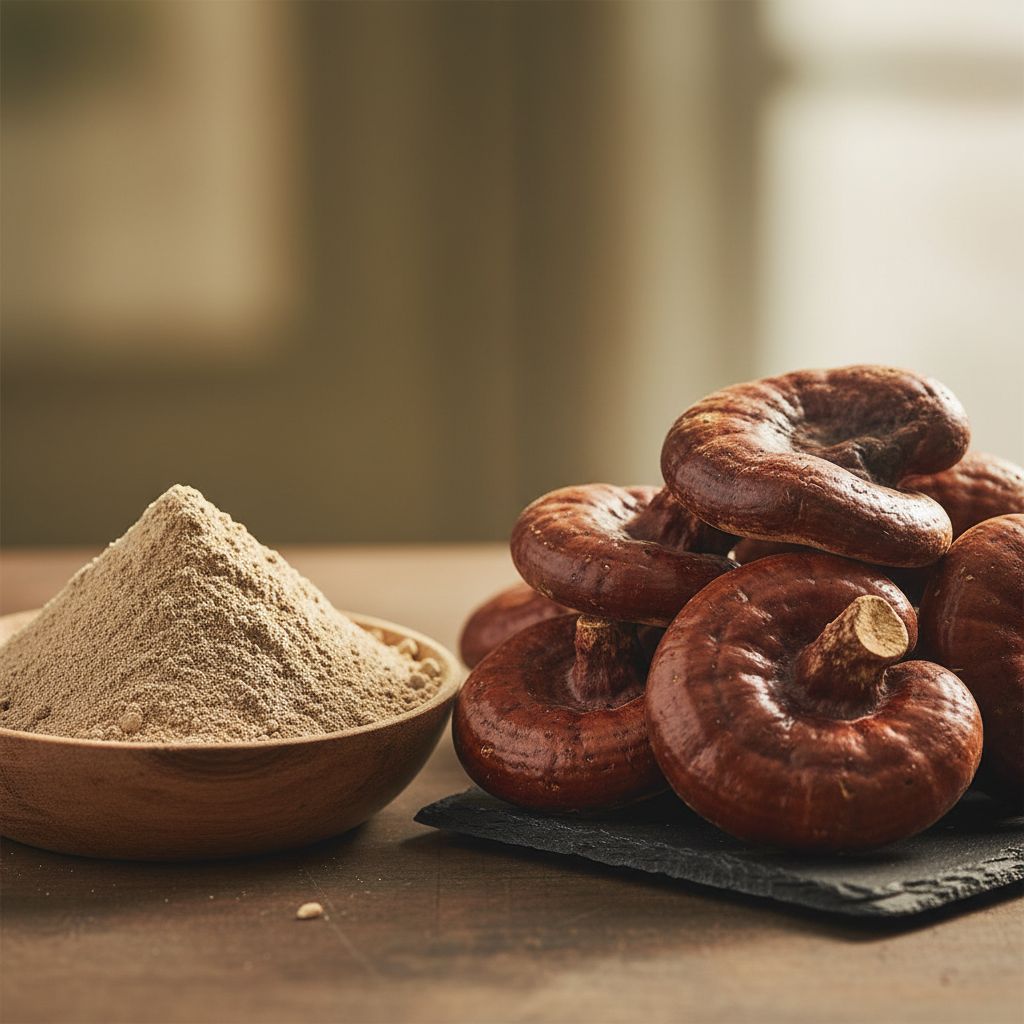
Lion's Mane contains two families of small molecules: hericenones and erinacines.
The names do not matter. What matters is three properties.
First, they are small — each weighs under 500 daltons, the practical cutoff for passive transport across the blood-brain barrier. Second, they are fat-soluble — they dissolve in fats and alcohols, exactly the right kind of molecule to pass through fat-based cell membranes. Third, they have a specific job on the other side of the barrier: they tell your brain's glial cells — the cells that maintain your neurons — to begin manufacturing Nerve Growth Factor again.
In plain English: you stopped making NGF in adequate quantities at fifty. The hericenones and erinacines in Lion's Mane appear, in the peer-reviewed laboratory literature, to tell your brain to start making it again.
This is not the same as taking NGF in a pill. NGF itself is too large to cross the blood-brain barrier. If a pharmaceutical company tried to sell you NGF in a capsule, it would be a fraud. The hericenones and erinacines do not REPLACE your NGF. They tell your brain to MAKE its own NGF — the way it used to, the way it did when you were forty.
The maintenance crew gets re-staffed.
The wear-down continues — that part is biology, it will continue until the last day of your life — but the repair shows up to meet it.
That is the science. That is what the Nobel Prize Committee was pointing at in 1986. That is what forty years of peer-reviewed research, mostly out of Japan, has documented. That is what nobody has put on the same page for you until tonight.
I am going to call this approach, for the rest of this letter, The Re-Staffing Protocol. Not because it is mine — the molecules are two thousand years older than I am — but because that is the simplest, most accurate plain-English name for what it actually does. Re-staff the maintenance crew the year you turned fifty fired.

Most letters like this one will hand you a hundred-and-forty-page protocol with a Q&A section and a calendar. I am not going to do that to you. The whole point of the Re-Staffing Protocol is that it is small, daily, and possible to follow on a Tuesday in November when you are also taking care of a grandchild and a leaking sink.
So before I walk you through the three peer-reviewed studies in the next section, here is the protocol — in three tips, in plain English, the way I would say it across a kitchen table to my own sister.
Avoid mycelium-on-grain. That is the technical name for what most $19 Amazon "Lion's Mane" bottles actually contain. It is not the mushroom. It is the underground root system, grown on a brown-rice substrate, freeze-dried whole — with the rice still in it. ConsumerLab tested twelve commercial bottles in 2022 and found that one in three were mislabeled "mushroom" when they were actually 35–70% grain by weight. Oats with mushroom dust. I will spend an entire section on this in a few pages. For now, the one thing to avoid is the bottle that does not say fruiting body on the label. If it says mycelium, or it doesn't say anything, walk away. The molecules that re-staff the maintenance crew are concentrated in the mushroom body — the white, shaggy, pom-pom-shaped part that grows above ground. Not the grain.
Enjoy the signals your brain is going to send back to you within fourteen days. Most supplements work invisibly. You take them for six months and your bloodwork looks slightly different at the next physical, and that is the end of it. The Re-Staffing Protocol is the opposite. Within sixty minutes of a single clinical dose, peer-reviewed evidence shows a measurable acceleration of reaction time on the Stroop test. Within three to fourteen days, fifteen to thirty percent of new users report a phenomenon I will describe in detail in a moment — vivid, plotted, color-saturated dreams that they have not had since they were thirty. Within two to four weeks, the 2 p.m. fog begins to lift. Within six to eight weeks, the doorway moment gets rarer, and the word-retrieval pause gets shorter. You are going to feel this in your own kitchen before your bank statement notices. That is the load-bearing promise of this letter, and it is the one I would not put on the page if I could not back it up with citations you are about to read.
Three capsules. With breakfast. Sixty days minimum. That is the entire protocol. Not a powder you have to whisk into anything. Not a tincture you have to drop under your tongue. Not a fasting window or a "stack" with three other bottles. Three capsules. With breakfast. Every day. For sixty days. Then — and this is the most important sentence in the protocol — keep going. The Mori 2009 trial I am about to walk you through showed that the gains were real and supplementation-dependent. When the trial ended at week sixteen and the patients stopped taking it, the cognitive scores slipped back to baseline by week twenty. The maintenance crew can be re-staffed. The maintenance crew can also be un-staffed if you stop showing up for the shift. The Re-Staffing Protocol is a daily practice, not a sixty-day cleanse.
Three tips. AVOID the grain. ENJOY the felt signals. DO three capsules with breakfast and don't stop.
That is the whole thing.
Now — for an audience that has tried fish oil for ten years and felt nothing — the most important question is not does the science make sense. The most important question is: can I, an ordinary 67-year-old American who has been burned by the supplement aisle four times already, actually FEEL it?
Yes.
In a clinically meaningful percentage of users, you can feel it inside the first hour.
Let me show you the study.
In 2023, a team of researchers in the United Kingdom published a study in the peer-reviewed journal Nutrients — volume 15, page 4842, principal investigator Dr. Sarah Docherty.
The design was simple. They took 41 healthy adults. Gave each a single 1.8-gram dose of Lion's Mane extract. Sat them at a computer sixty minutes later. Put them through the Stroop test — a standard reaction-time measurement used in cognitive research for nearly a century.
The result, in the words of the published paper:
Reaction time accelerated from 737.70 milliseconds at baseline to 688.05 milliseconds at sixty minutes post-dose.
About fifty milliseconds faster. After one dose. With a statistical confidence of p equals 0.005 — which, for those of you who never suffered through a statistics class, means the probability of this result happening by random chance is one in two hundred. That is a stronger result than most prescription drugs ever produce on their best day.
Fifty milliseconds is the difference between catching the salt shaker before it falls off the table, and watching it tip past your reach. It is the difference between finishing your sentence at the right moment, and trailing into the silent half-second where your daughter-in-law has to fill in the word.
Now, I want to be honest. It was 41 people. It was a pilot study. The subjects were healthy adults, not people in their late sixties with mild cognitive impairment. The result is suggestive, not definitive — a larger trial in our population has not yet been published.
But it tells you something the Aricept trials cannot tell you, and the fish-oil trials never told you. Lion's Mane, in human beings, in a peer-reviewed laboratory setting, produces a measurable cognitive effect inside one hour of a single dose.
It is unusual. It is reproducible. It is real.

Something happens to between fifteen and thirty percent of people who start taking Lion's Mane for the first time.
Within three to fourteen days of beginning supplementation — most commonly around night five or six — many users report something I will describe in their own words:
"I had the most vivid dream last night. I haven't dreamt like that since I was a teenager."
"I can read the text on the signs in my dreams now. I never used to be able to do that."
"I had a dream with a full plot. A beginning, a middle, and an end. I told my wife the whole story."
"I have not remembered a dream in twenty years. I remembered four of them last night."
This is a documented phenomenon, reported across forums, supplement reviews, and informal user surveys. It does not happen to everybody. The estimates put it at one in five to one in three new users, in the first two weeks of supplementation, at clinical-grade doses.
I want to tell you why this matters. Because for the audience this letter is written for, this is the single most important piece of information in the entire science of Lion's Mane.
You cannot placebo-effect your way into a vivid dream. You cannot expect-yourself-into a coherent plotline you describe in detail at breakfast. You cannot wish-yourself-into reading the text on a sign in a dream when you have not been able to do so since you were eighteen.
This is, in the strictest scientific sense, an undeniable felt event. You wake up, look at your spouse across the breakfast table, say Honey, you wouldn't believe what I dreamed last night, and in that moment the question of whether the science is real is no longer an abstraction. You are living inside the answer.
The mechanism is not mystical. REM-stage dreaming is generated by a small cluster of cholinergic neurons in your brainstem. When acetylcholine availability goes up, REM episodes get longer and more vivid. Lion's Mane raises acetylcholine availability — mildly, naturally, by supporting its production and slowing its breakdown. The same lever Aricept rides, except gentler, and natural, and not at the cost of slowing your heart.
The result, in roughly one in four new users, is a felt return to the kind of dreaming you used to do at thirty.
If you start Mind Forge tonight, take it for two weeks, and notice nothing — not the dream effect, not the morning clarity, not the word-retrieval, not the 2 p.m. fog lifting — send the bottle back. I will refund every dollar. No questions. No restocking fee.
But for most of you, the question at week three will not be does this work. It will be why did nobody tell me this fifteen years ago.
The answer, as I have said three times in this letter, is that there is no patent on a mushroom that has been on Han-Dynasty scrolls for two thousand years.

I do not want to be the kind of writer who throws a dozen studies at you and expects you to feel persuaded just because the page is dense.
I want to walk you through three.
Three studies. Three different timeframes. Three different populations. Three different research teams, on three different continents, working independently of one another. All published in peer-reviewed journals. All available, today, on the National Library of Medicine's PubMed database, where you can verify every word I am about to say if you choose to.
These are the studies that took your doctor's job and did it for him.
In 2008, a team led by Dr. Koichiro Mori recruited thirty Japanese adults between fifty and eighty. Every one was formally diagnosed with mild cognitive impairment — the condition that, in roughly half of cases, becomes Alzheimer's over the following five to ten years.
The researchers split them into two groups. Group one received Lion's Mane — three grams per day, fruiting-body powder. Group two received placebo. Double-blind. Sixteen weeks. Cognitive test: the Revised Hasegawa Dementia Scale, the Japanese MMSE.
At weeks four, eight, twelve, and sixteen, the Lion's Mane group scored significantly higher than placebo at every measurement.
Then the trial ended. The Lion's Mane group stopped supplementing. Four weeks later, at week twenty, their scores had slipped back to baseline.
This is the most important sentence in the Mori paper. The gains were real. They were also dependent on continuing to take the mushroom. The maintenance crew can be re-staffed by Lion's Mane. The moment the supplement stops, the staffing drops back to where it was before.
Published in Phytotherapy Research, volume 23, pages 367–372. Authors: Mori, Inatomi, Ouchi, Azumi, Tuchida. PubMed identifier 18844328.
I want to be honest about the limits. It was thirty patients — a small sample, conducted in Japan, with a Japanese strain. The result is suggestive, not definitive. What I can tell you is that in older adults with the early quiet signs of cognitive decline, Lion's Mane produced a statistically significant, supplementation-dependent improvement on a standard dementia-screening exam at every point for sixteen weeks running.
That is one. Two more.
In 2020, a Taiwanese group led by Dr. I-Chen Li pushed the Mori finding three times further on duration.
Forty-one adults. All formally diagnosed with mild Alzheimer's disease. Randomized, double-blinded. Three capsules per day of erinacine-A-enriched Lion's Mane mycelium, or matching placebo. Forty-nine weeks — nearly a year.
The Lion's Mane group's MMSE score rose from 21.75 to 23.20. The placebo group's score declined. Statistical significance: p = 0.035. Instrumental Activities of Daily Living (IADL) — the test of whether you can still handle your own money, transportation, and meals — was significantly higher in the Lion's Mane group at week forty-nine. p = 0.012.
For forty-nine weeks. In Alzheimer's patients. The Lion's Mane group did not just hold their cognitive scores. They rose. And they stayed independent. While placebo declined.
Published in Frontiers in Aging Neuroscience, volume 12, page 155. Open-access. You can pull it tonight from frontiersin.org without a university password.
I want to be honest here too. Forty-one patients is a small sample. Erinacine-A-enriched mycelium is a specific preparation. The patients had mild Alzheimer's, not the early decline you and I are mostly talking about. Suggestive, not definitive.
But Aricept, after forty-nine weeks in the same population, would have produced a small, declining trajectory — managing symptoms while the disease continued. The Li 2020 trial showed something Aricept has never been shown to do. Improvement on a standardized cognitive test, in actual Alzheimer's patients, over nearly a year, with no nightmares, no bradycardia, no syncope, no weight loss.
In 2019, a team led by Dr. Lei Feng at the National University of Singapore looked at the actual dietary habits of 663 Singaporeans aged sixty and over.
The question was simple. Did people who ate mushrooms more than twice a week have different rates of mild cognitive impairment than people who ate them less than once a week?
Adults who ate two or more servings of mushrooms per week had roughly fifty percent reduced odds of mild cognitive impairment compared to adults who ate fewer than one serving per week.
Fifty percent.
Published in The Journal of Alzheimer's Disease. Population studies cannot prove causation — only randomized trials can. What it does prove is that, in a real-world community, the people who ate the most mushrooms had the lowest rates of the condition that becomes Alzheimer's.
The study was not specific to Lion's Mane. It looked at all mushrooms — Lion's Mane, oyster, shiitake, button, dried, golden, white. The mechanism is almost certainly the cumulative cognitive support that several mushroom species share.
Which is why the formulation I am about to tell you about is not just Lion's Mane.
It is Lion's Mane plus nine other functional mushrooms — Reishi, Cordyceps, Chaga, Turkey Tail, Maitake, Shiitake, Agaricus Blazei, Poria, and Oyster.
Ten mushrooms. 600 mg of 10:1 full-spectrum fruiting-body extract per serving. Three capsules a day. Manufactured in a U.S. cGMP-certified facility, third-party tested in U.S. labs — at a moment when the FDA's own Import Alert 25-05 had 91% of sampled Chinese dried-mushroom shipments detained at the U.S. border for filth.
We will get to the supply chain in a few pages.
First, I owe you the reason this letter exists. I owe you my father.
His name was Tom Edwards.
He grew up on a wheat farm in Kansas. Served four years in the United States Navy. Could rebuild the engine of a 1957 Ford pickup with one good wrench and a roll of baling wire on a hot afternoon in August. Raised three children, paid for two college degrees out of his own pocket, finished out his working life as a maintenance foreman at a small plant outside Wichita.
By every measurable American standard, an exceptionally competent man.
At fifty-eight, he got diagnosed with Type 2 diabetes. The first pill was metformin. The second was for his blood pressure. The third was for cholesterol. The fourth was a low-dose aspirin. The fifth was a sleep aid the doctor said was probably temporary, which my father, predictably, never came off of. The sixth was for the GI side effects of the first five. The seventh was for the leg cramps the sixth was causing.
By his sixty-fifth birthday, my father was taking eleven prescription medications a day.
By his sixty-sixth birthday, he had been diagnosed with vascular dementia.
The same blood-vessel changes the diabetes had caused in his feet, his kidneys, his eyes, were happening — slowly, quietly, microscopically — in the small vessels that feed the white matter of his brain. The eleven medications managed the surface symptoms while the underlying biology kept moving downhill. Nobody on his medical team ever sat him down and said the words.
In 2020, the doctor added the twelfth prescription.
Aricept. Five milligrams, then ten, then talk of the higher dose. The nightmares started in the third week. The leg cramps got worse. He lost weight he could not afford to lose. His heart rate, which had run a steady 72 his whole life, was logged at 56 in the cardiologist's office. My mother, by that point, was managing twelve pill bottles on the kitchen counter.

And on Christmas morning of 2020 — eleven months after the Aricept prescription, six months before my father would die in the spring of 2021 — my six-year-old daughter Ella climbed into her grandfather's lap with a sugar cookie shaped like a snowman, kissed him on the cheek, and asked him to tell her a story about when he was a boy on the farm.
My father looked at her. He held the sugar cookie for a long moment. He looked at me — his eldest son, standing in the doorway with a coffee mug in my hand and a Christmas-morning ache in my chest I have not been able to put down since.
And he said, very quietly, with no anger in it and no fear in it and no awareness that he was breaking my heart:
Ella did not understand what had happened. She kept smiling. She climbed off his lap and went to find the dog.
I stood in the doorway and I made a decision.
Whatever the medical system had done to my father, it was not going to do to me. It was not going to do to Ella's father. It was not going to do, if I had any breath left in my body to fight it, to any father in any family who read a letter like this one and decided to do something different.
My father died six months later, on a Tuesday morning in the spring of 2021. He was seventy-one.
I stood at his grave with my brother and my mother and my daughter, who had turned seven. The wind moved the wheat in the field next to the cemetery — the same field my father had walked through as a child, the same field his grandfather had broken to the plow in 1903.
I made my father a promise that day. I would not let his death be for nothing. I would find out what had actually happened to him. Not the obituary version. Not the doctor's-office version. The real version. The cascade. The Aricept that came at the end like the last truck in a parade nobody had asked for. The 35.7% nightmare rate. The 2024 meta-analyses nobody who treated him had read. The protein his brain stopped making the year he turned fifty. The Italian-American Nobel laureate at Washington University in 1986. The Han-Dynasty mushroom on the wall of a Buddhist temple two thousand years ago.
I am not a doctor. I am not a Ph.D. I do not have a research lab. I am a father, a son, and a husband, who buried a man he loved before he was ready to bury him, and who decided, in the doorway of his parents' living room on Christmas morning of 2020, that the rest of his professional life would be spent looking for the science his father's medical team never sat down to find.
I spent the next five years reading eight hundred peer-reviewed studies. Mori 2009. Li 2020. Feng 2019. Docherty 2023 the week it came out. The Public Citizen petition. The Nobel Foundation press release from 1986. The 2024 Frontiers in Neuroscience meta-analysis on the cholinesterase inhibitors. The FAERS pharmacovigilance reports. The FDA Import Alert 25-05. The 1954 Cancer Research paper Rita Levi-Montalcini wrote from Washington University. Papers in Japanese with a translator, papers in Italian with a worse translator, papers in Mandarin with no translator and a great deal of guessing.
In the third year, my team at Fixity Health launched our first product — a berberine formulation for the diabetes side of the cascade, where my father's slide had actually begun.
This year, we launched Mind Forge 10x. The cognitive side. The one I wish my father had been on at fifty, when the maintenance crew first started showing up understaffed.
Let me tell you what it is.

I want to come back to Bill Harrington.
I left him on page two of this letter at the worst point of his life. Eight months into the Aricept prescription. Fourteen pounds lost. Sheet-fighting nightmares at three in the morning.
Rose Harrington, in case I have not made this clear, is not a doctor. She had a high school diploma from a Scranton public school, forty-six years of marriage to a railroad man, and a stubborn streak that conservative American grandmothers tend to come equipped with by the time they hit sixty-five.
She started, as I did with my father, by reading.
The meta-analyses. The FDA reviewer override. The patent timing. The FAERS database. NGF. Lion's Mane.
Then she walked into the same eleven-minute office, put a stack of printed PDFs on the desk, and asked the doctor a simple question. "Doctor, why have you never mentioned any of this?"
The doctor, to his credit, was honest. Mrs. Harrington, I have never read these papers. We do not get continuing-education credit for them. The drug-rep does not bring them to lunch. If you would like to try this approach with your husband, I will not write a prescription against it, but I cannot recommend for it either, because I do not know the literature.
Rose tapered Bill off Aricept under the doctor's supervision over six weeks. She started him on Mind Forge 10x in the spring of 2024.
Six months later, she sent me a letter.
I keep that letter in a folder in my office in Orlando.
It is not the only one.
I want to tell you about a few of the others. None of these are composites. None are made up. Every one of these is a letter that arrived at my office at 5036 Dr. Phillips Boulevard in Orlando in the last twelve months.
Walter and Marjorie, Tulsa, Oklahoma. Walter is sixty-eight. The breaking point came when Marjorie found him at the kitchen table at 2 a.m., crying quietly because he had forgotten the name of his college roommate. Forty-six years of friendship. He had lost the name. By Mind Forge week three, Walter was the one making the morning coffee. By week eight, he was the one reminding Marjorie about the dentist appointment she had forgotten. Her letter ended: "I did what conservative American grandmothers do. I did my own damn research."
Ron T., 71, Akron, Ohio. Retired machinist. He had been calling the Denny's waitress honey for a year because he could not access her name. The name is Brenda. At Mind Forge week six, Ron said "thank you, Brenda" without thinking. His wife Linda cried into her pancakes. She wrote me the next afternoon with a photograph: the two of them holding hands across the booth, the waitress in the background, confused about why the older couple was laughing.
Eleanor M., 71, Charleston, South Carolina. Wrote a one-page letter. It said: "I have stopped apologizing at dinner." I will let that sentence sit on the page by itself.
Harold B., 65, Lancaster, Pennsylvania. Harold's father died of Alzheimer's at seventy-nine. Harold started Mind Forge as a precaution — before he noticed anything himself, while he still had the option. At month six he finished reading a chapter of Tolstoy. War and Peace. He had not made it through a chapter of anything more demanding than a magazine in years.
Father Raymond Delgado, 78, El Paso, Texas. Retired Catholic priest. Had lost his place in a Sunday homily the previous year — the next line would not come, he sat down, he let the deacon finish the Mass, he thought it might be the end of his time at the pulpit. He started Mind Forge in spring 2024. On the Feast of All Saints, he preached a Beatitudes homily from memory. Twenty-six minutes. No notes. His letter on diocesan stationery the following week said, "Mr. Edwards. I asked God for one more year in the pulpit. He answered through a mushroom. I will let you decide whether to find that funny or not."
Nancy Blake, 72, Biloxi, Mississippi. Widowed. Lives alone. By week eight, she had remembered every name at the senior-center bingo table — Wendell, LaVerne, Doris, Hank, Sister Marie. The smaller win, she wrote, was the bigger one: she had stopped dreading Tuesday afternoons. The dread is what Mind Forge took away first.
James Callahan, 67, Sioux Falls, South Dakota. Retired postal carrier. Brother died of Alzheimer's at seventy-one. Started Mind Forge as a precaution, before he noticed anything himself. At month four, he walked the old route — to the post office and back, the same thirty-eight-year route — and remembered the names of three new postmasters' kids who had been hired since he left.
Dorothy S., 74, Flint, Michigan. Grandmother of eleven. Got every name right at Christmas dinner this year. All eleven. Without writing them on her hand. She had been writing them on her hand for three years.
I am not going to read you the rest. There are about four hundred more in the folder. The point is not that Mind Forge 10x is a miracle. It is not. It is a peer-reviewed, mechanism-supported, ten-mushroom formulation, manufactured under U.S. cGMP standards, third-party tested in U.S. laboratories, sold by a Florida company run by an ordinary American father who buried his dad in spring 2021 and decided to spend the rest of his working life on this one problem.
What the letters tell me is that, for the people who try it, it works. Not for everyone. Not on day one. Not without continuing to take it.
But for most.
And for many of them, at week six or week eight, in a way they can tell their spouse about at breakfast.
That is what I have to offer you tonight. Let me tell you what it costs.
You are going to see $19 Lion's Mane bottles on Amazon. You are going to be tempted. So before I quote the price, I owe you the truth about what's in them.
When the U.S. Food and Drug Administration ran a sampling sweep of dried mushroom shipments from China and Hong Kong, they opened twenty-two shipments and detained twenty. Twenty out of twenty-two — ninety-one percent — for, in the FDA's own clinical language, filth. Rodent waste, insect parts, hair, mold, foreign material.
The FDA, in response, issued Import Alert 25-05 — a standing order that authorizes the agency to detain, without further physical inspection, all dried fungus and dried mushroom shipments from China and Hong Kong, on the assumption that any such shipment is presumptively adulterated until proven otherwise. Import Alert 25-05 is still in force as I write this letter. You can read it tonight at accessdata.fda.gov.
This matters because China produces the overwhelming majority of the world's mushrooms — close to forty million metric tons per year — and nearly all of the Lion's Mane raw material on the U.S. market originates there. The United States produces a fraction of a fraction of that. There is no commercial American Lion's Mane fruiting-body supply chain at supplement scale.
I cannot claim the mushroom in your bottle was grown on an American farm. There is no American farm at the scale required, and I am not going to lie to you to make a sale.
What I can claim — and what is documented on every Certificate of Analysis I will mail you on request — is this:
Mind Forge 10x is manufactured in a cGMP-certified facility in the United States. Encapsulated, bottled, labeled, shipped from American soil. Inspected to 21 CFR Part 111. Independently third-party tested in U.S. laboratories for heavy metals (lead, arsenic, cadmium, mercury), pesticide residue, microbial contamination, and label-claim potency. Every batch tested to USP heavy-metal standards — at a moment when the FDA's own border inspections were detaining 91% of sampled Chinese mushroom shipments for filth.
That is the contrast. Not "we don't use Chinese mushroom." Every major Lion's Mane supplement on the American market does, because that is where it grows. The contrast is what we do after it arrives. We test it. Twice. In American labs. Before it goes into your bottle.
The $19 Amazon bottle does not test. There is no federal law requiring it to. The bottle gets shipped from a Chinese contract manufacturer, packed by a re-seller, listed on Amazon under a brand name that, six weeks later, will not exist. By the time the heavy-metal lab work would have caught the lead or the cadmium, the seller is gone, the brand is renamed, and the bottle is in your medicine cabinet.
There is a second problem with the $19 bottle.
It is probably not mushroom.
A great deal of what is sold on Amazon as "Lion's Mane mushroom" is, in fact, mycelium grown on grain. Mycelium is the underground root structure, not the mushroom body that grows above ground. It contains a fraction of the active hericenones and erinacines. Worse, the mycelium is grown on a brown-rice or oats substrate, and the entire mass — mycelium plus substrate — is freeze-dried, ground up, and packed into capsules.
In 2022, ConsumerLab.com published their Lion's Mane review. Of twelve commercial products tested, four — one in three — were mislabeled as "mushroom" when they were actually mycelium-on-grain. Average composition: 35% to 40% starch by dry weight, with some products running as high as 60–70% grain.
The $19 bottle on Amazon may be, by weight, mostly rice or oats.
You have been paying $19 for oat flour. And hoping the oat flour was going to do for your brain what Mori 2009 and Li 2020 documented at clinical doses of actual fruiting-body extract. The molecules in oat flour are not the molecules in fruiting-body Lion's Mane. The maintenance crew was never going to come back from a daily dose of finely ground breakfast cereal.
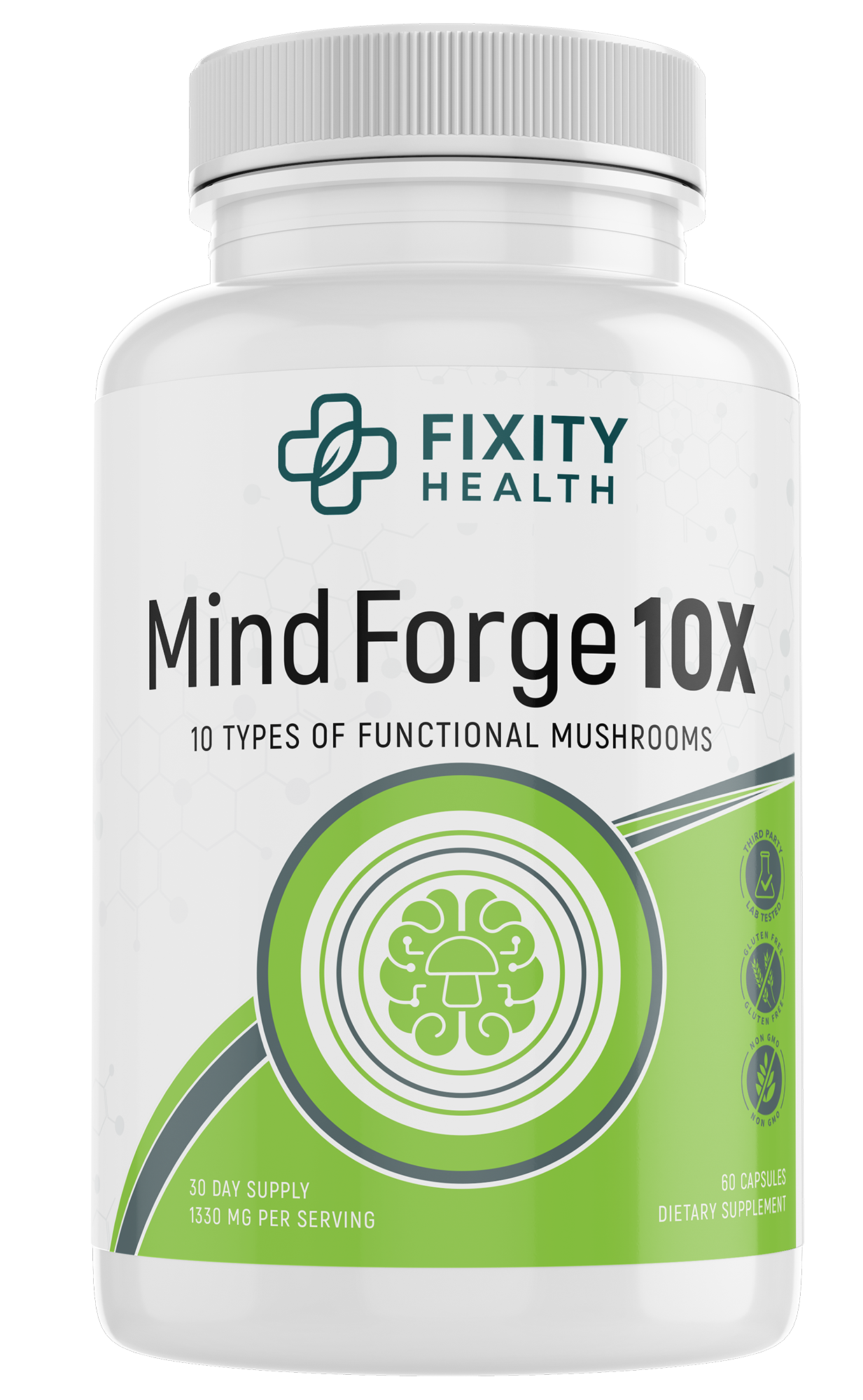
Mind Forge 10x is 600 milligrams of ten-to-one, full-spectrum, fruiting-body extract per serving. Three capsules a day. Real Lion's Mane. Real Reishi, Cordyceps, Chaga, Turkey Tail, Maitake, Shiitake, Agaricus Blazei, Poria, and Oyster. Ten mushrooms. Fruiting body. Extracted at clinical concentration. Encapsulated, tested, and shipped from the United States.
Now let me tell you what it costs.
I want to give you the math out loud, because I want you to see exactly what this decision looks like before you make it.
The brand-name Aricept prescription that Bill Harrington's doctor wrote on that pad runs, as I have said, about $400 a month at cash retail. Multiplied across twelve months, that is $4,800 a year. And that is before the cardiologist visits, the GI medications, the leg-cramp prescription, the sleep aid, and the fall-prevention work that follows when the bradycardia gets serious. Most families who go down the Aricept road, between the drug itself and the cascade of secondary medications it triggers, are spending closer to $10,000 to $36,000 over five years.
The premium brain-supplement bottles you may have seen advertised in conservative magazines — the ones with the doctor's headshot on the front of the label, charging $59 or $69 for a thirty-day supply — would run you, at one bottle a month, between $700 and $830 a year.
The conservative talk-radio sponsors — the Strong Cells, the Patriot Power Greens, the ones with the host-discount codes — typically run $29 to $69 a bottle. Real products in some cases. Real prices for the category.
The $19 Amazon mycelium-on-grain bottle, which I have just spent four pages explaining is not actually mushroom — runs about $228 a year of money you are spending on oat flour.
Mind Forge 10x, on our Never-Run-Out Plan — the easy auto-delivery option that has the bottle on your doorstep before the previous bottle runs out, no commitment, no contract, pause-or-stop with one click — is $29 a month.
Twenty-nine dollars.
That is ninety-seven cents a day.
That is less than the deposit on a Botox visit. That is less than the daily fee on the cup of coffee you stopped buying at Starbucks last spring because you were trying to save money. That is less than a single co-pay at most American GP offices, for the eleven-minute visit that ended with the Aricept prescription.
Twenty-nine dollars a month. Ninety-seven cents a day. $348 a year.
Less than one month of brand-name Aricept.
For the bottle that is the closest thing the peer-reviewed literature currently offers to a non-patentable alternative to that pill.
If you prefer not to use the Never-Run-Out Plan — if you would rather order one bottle, see how the first thirty days go, and decide from there — the single-bottle price is $49 plus shipping. Same bottle. Same formula. Same U.S. manufacturing, same U.S. testing, same ten mushrooms, same 600 milligrams of ten-to-one full-spectrum fruiting-body extract.
That is the offer.
Twenty-nine dollars a month on the Never-Run-Out Plan, or forty-nine dollars for a single bottle.
60-day empty-bottle money-back guarantee · Pause or stop in one click · 3 free bonus guides ($93 value)
But that is not all of it.
When you order Mind Forge 10x tonight, I am going to send you three additional pieces of material that my team and I have built over the last two years. None of them are sold anywhere else. None of them cost extra. All of them are included, free, with your first bottle.
The NGF Protocol Guide
This is the document I wish my father had been handed at fifty, instead of his first metformin prescription at fifty-eight. It is the practical, plain-English summary of the forty-year arc of NGF research — what NGF is, what your brain does with it, what your body stops doing at fifty, and what the peer-reviewed literature says you can do about it. The guide includes the daily protocol my team and I follow ourselves. Forty-seven dollars of value. Yours, free.
The Brain Food Grocery List
I have asked the team at Fixity Health to compile the list of foods that the peer-reviewed literature most consistently associates with cognitive support — including, but not limited to, mushrooms. The list also tells you what to avoid — the specific items in the modern American grocery store that the research suggests are working against the maintenance crew in your brain. You will recognize most of the items. You will not enjoy seeing them on the wrong side of the list. But you will know what to put in your cart and what to leave on the shelf. Twenty-seven dollars of value. Yours, free.
The 30-Day Memory Challenge
A simple, day-by-day, week-by-week protocol — what to notice, what to expect, what to look for at week one, week two, week four. The companion document to your bottle. So that when the dream effect arrives, or the morning-clarity effect arrives, or the word-retrieval improvement arrives, you have already been told to watch for it. Nineteen dollars of value. Yours, free.
The three guides total $93 in stated value.
All of them come, in PDF, the moment you complete your order — long before the first bottle arrives in the mail.
That is the offer.
A 30-day supply of Mind Forge 10x.
The NGF Protocol Guide.
The Brain Food Grocery List.
The 30-Day Memory Challenge.
For $29 on the Never-Run-Out Plan. Or $49 plus shipping for a single bottle.
But that is still not the entire offer.
Because I am not going to ask you to make this decision on faith.
I am going to put the entire transaction at my own risk, not yours.

I want to be honest with you about why the guarantee exists in the form it exists.
Most supplement companies offer a guarantee because their lawyers told them to. The fine print is two pages. The customer-service number is buried. The restocking fee is real. The empty-bottle policy says you have to send the bottle back unopened, which means by the time you have figured out whether the product is working, the window has closed.
I do not run that kind of company.
I am going to tell you, three different ways, why you are going to be safe if you order tonight.
Not thirty. Not "you can return it before you open it." Sixty days.
That is one full bottle plus most of a second bottle. It is enough time to live through the timeline I described in the research section — the first-night possibility of vivid dreams, the first-week fog-lifting effect, the two-week dream effect, the four-week mood lift, the eight-week clinical-grade window. By the time the sixty-day clock runs out, you will have lived inside one of two realities. Either Mind Forge 10x has begun doing for your brain what it has done for Bill Harrington's, in which case you are not asking for the refund — or it has not, in which case I want your money back in your account, with a phone call, not a fight.
I do not want you to send me the unused capsules. I do not want you to ration the bottle to make sure you have enough left at the end of sixty days "in case the refund needs it." That is the opposite of how this product is supposed to be used. Take every capsule. Take all 180 of them across the two bottles. If at the end of the sixty days you have not noticed anything, you have not felt anything, you have not had a single signal that something is changing — send the empty bottles back. The refund will be the same.
There is no $19 processing fee. There is no $14 "non-refundable shipping" carve-out. There is no $30 "open bottle handling charge." The price you paid is the price that comes back. The U.S. lab Mind Forge ships out of, in Florida, returns to you the full amount of your transaction — minus the cost of the original shipping, which we paid to get the bottle to your door in the first place.
That is the triple guarantee.
Sixty days.
Empty bottles welcome.
No fees.
If you do not feel something — if Mind Forge does not do for you what it has done for Bill Harrington, what it has done for Eleanor M., what it has done for Father Delgado at the pulpit in El Paso — you do not pay for it.
I want to come back, one last time, to the kitchen scene at the beginning of this letter.
The coffee mug in your hand. The back door three inches open. The seven seconds where the whole reason you walked into that room was simply gone.
You have probably been telling yourself for six months that it is normal aging. That your father had it, his father had it, nothing to be done. That the next ten years are going to be a slow withdrawal from a life that used to feel sharp.
I am asking you, tonight, to reconsider that.
What you have been noticing is real. It is also not what your mother had. There is a protein your brain stopped making at fifty. There is a Nobel Prize that named the disease in the citation. There is a 2,000-year-old answer on a Han-Dynasty scroll. There is a 49-week peer-reviewed trial in Frontiers in Aging Neuroscience. There is a 35.7% nightmare rate on the pharmaceutical alternative.
And there is a bottle on my desk in Orlando, Florida, with your name on the shipping label if you want it tonight.
You have every right to put this letter down right now, walk into your kitchen, pour another cup of coffee, and decide that nothing has changed. You have lived sixty-five or seventy years. You have made your own decisions. You do not owe me, or anyone else, a transaction.
You have every right to take this letter to your GP at your next routine visit and ask him directly whether anything I have written is true. He will probably tell you he has not read these studies. He will probably tell you the supplement category is unregulated. He will probably also tell you, if he is honest, that the prescription he would otherwise write is the same one the FDA's own reviewers recommended against approving at the high dose, and that the 2024 meta-analyses confirmed does not alter the underlying course of decline. You will have to decide whom to trust.
And you have every right to order a single bottle of Mind Forge 10x tonight, take it for sixty days, watch what happens, and decide for yourself. If at the end of sixty days you feel nothing — if the fog has not lifted, the words have not started coming back, the doorway moment has not gotten rarer, the dreams have not gotten more vivid — I refund every dollar. Empty bottles fine. No fees. No fight.
The decision is not whether you trust me. I am a stranger to you. The decision is whether you give yourself the chance to find out.
You don't need more information.
If the decision is no — if you are not ready, or this is not your year — close this letter, put it in a drawer, come back to it next spring. The offer will not change because you waited. But the maintenance crew in your skull, the one that has been understaffed for a decade, will have lost another six months of repair.
If the decision is yes, here is what to do. Click the button below this letter. You will be taken to a single page that asks whether you want a single bottle for $49 plus shipping, or the Never-Run-Out Plan at $29 a month. You pick. You enter your address. You enter a card. The transaction takes ninety seconds. You will get an email immediately with the three free guides to read tonight, before the bottle arrives. The bottle will arrive at your door in three to five business days. You will start the morning it arrives. Three capsules. With breakfast.
And the next sixty days, on this part of your life, will not be in my hands. They will be in yours.
I have done everything I know how to do, in this letter, to put the science in front of you. I have told you about my father. I have told you about Bill Harrington. I have read you the Nobel citation. I have shown you the FDA scandal. I have priced it at $0.97 a day. I have guaranteed it three different ways.
The rest is the part nobody else can do for you.
You don't need more information.
You need a decision.
Make it tonight.
Yours, with everything I have,

Mark Edwards
Founder, Fixity Health
Orlando, Florida
P.S. I want to say one more thing about Rita Levi-Montalcini, the Italian-American Nobel laureate I described to you on page eight of this letter. After she retired from Washington University in St. Louis in 1977, she went back to Italy and kept working — for thirty-five more years. She was named Senator-for-Life of the Italian Republic in 2001 at the age of ninety-two, walked into the Senate chamber, and delivered policy speeches on neuroscience until 2012. She died at the age of one hundred and three, mentally sharp, working on papers about NGF the week before her death. The molecule she discovered, the one your brain has been low on since the year you turned fifty, was — in some quiet, decades-long, almost karmic way — the same molecule that kept the woman who discovered it cognitively sharp into her second century. I do not know what to make of that, exactly. I just know that I read the obituary, when I was in the third year of my research, and I sat in my kitchen in Orlando and I thought, that is the goal. That is the goal. Not Aricept and bradycardia at seventy-one. Rita Levi-Montalcini at one hundred and three, walking into the Senate, telling a chamber full of younger people what she discovered when she was a refugee with sewing needles in a bedroom in Turin.
That is the goal.
I want it for myself. I want it for my mother, who is seventy-eight as I write this and has, by the grace of God, started Mind Forge in the spring of this year. I want it for Ella, who is eleven now, and who deserves to have a father who remembers her name when she is forty-three and I am eighty-five.
And I want it for you. Whatever your reasons for opening this letter. Whatever name you read the obituary of in 2014, or 2018, or last spring. Whatever you have not told your spouse about the 2 a.m. search bar.
You have every right to want it for yourself, too.
P.P.S. One last specific number, because conservative-leaning readers tend to be the kind of people who like specific numbers. The 2009 Mori trial measured 30 patients with mild cognitive impairment over 16 weeks. The Lion's Mane group scored significantly higher than placebo at weeks 8, 12, and 16. When the trial ended at week 16 and the patients stopped supplementation, the scores regressed to baseline by week 20. The maintenance crew can be re-staffed. The maintenance crew can also be un-staffed if you stop showing up for them. That is the entire reason the Never-Run-Out Plan exists. The science does not work if the bottle does not arrive. That is not a marketing argument. It is what the Mori paper said in 2009, in the discussion section, in plain English, on page 372 of Phytotherapy Research.
P.P.P.S. If you do nothing else after putting this letter down, I want you to do one thing. Go to nobelprize.org. Search for "1986 press release." Read the official Nobel Foundation citation for that year's Prize in Physiology or Medicine. Read the line where the committee names "senile dementia" as one of the diseases the discovery of NGF and EGF was expected to help understand and treat. Read it in their own words. So that you know, for the rest of your life, that this letter was not exaggerating. The Nobel committee — in 1986, in front of the king of Sweden, in writing, in the official press release — named the disease your mother had as one of the diseases this Nobel-winning American science was expected to help treat. Forty years ago. And nobody told you. Until tonight.
You don't need more information.
You need a decision.
— M.E.