
And the 2,000-year-old mushroom Buddhist monks used to turn it back on — now backed by a 2020 peer-reviewed Japanese clinical trial on Alzheimer’s patients.

Dear Friend,
I see you.
Standing in the kitchen at 2 p.m., holding your car keys, trying to remember why you walked in here.
I see you laughing it off at dinner — “senior moment” — while quietly wondering if your mother started exactly this way.
I see you Googling at midnight, reading things you wish you hadn’t, closing the laptop, and not telling your spouse.
You are not crazy. You are not lazy. And you are absolutely not “just getting old.”
Something specific is happening inside your brain. It has a name. And for the first time in your adult life, there is peer-reviewed science explaining both what it is and how to reverse it — without a prescription, without a neurologist, and without a single synthetic molecule.
Here is the belief I want to plant, and then prove, and then let you decide.
Memory loss after 50 is not your brain getting old. It’s your brain running out of a single repair protein called NGF — Nerve Growth Factor — and once NGF drops, every other “symptom” you’re worried about follows automatically.
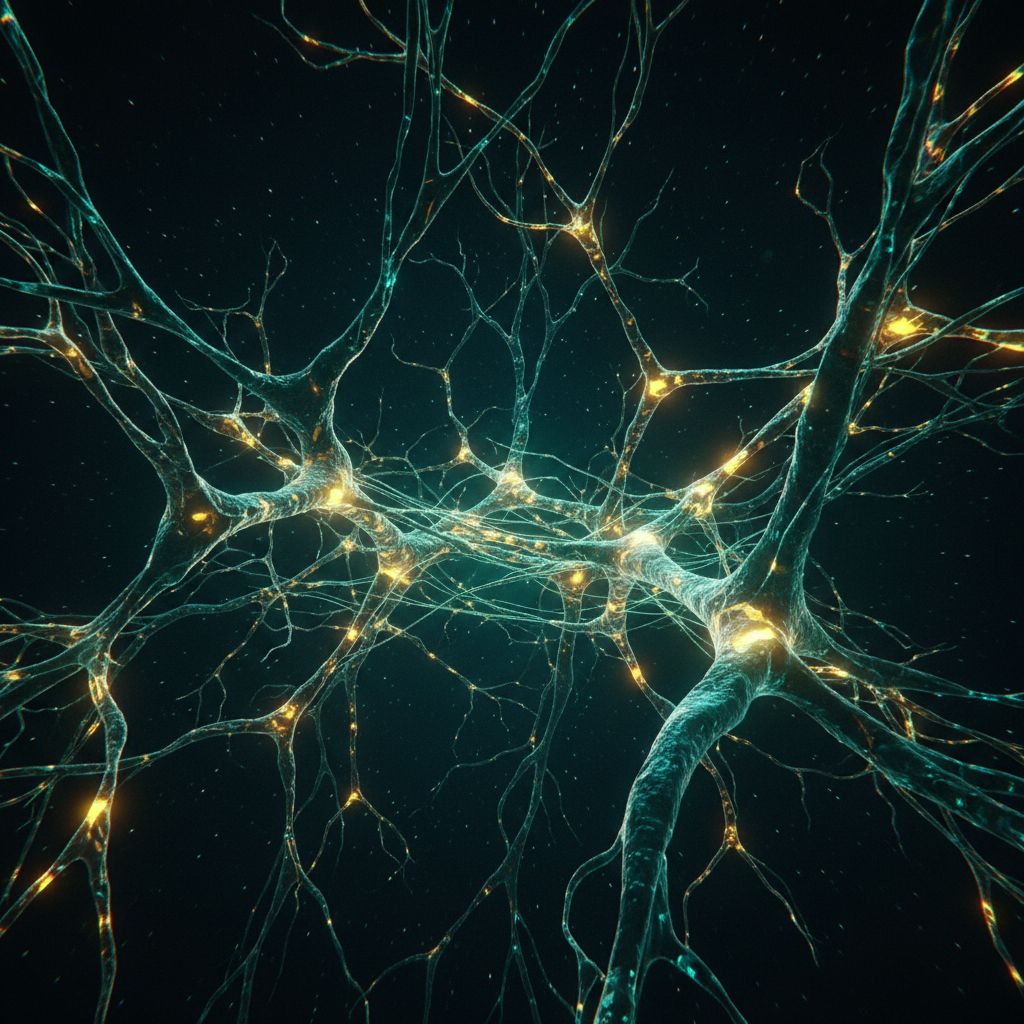
NGF is the master gardener of your brain. It grows new neurons. It repairs damaged ones. It keeps the wiring between your memories intact. Dr. Rita Levi-Montalcini won the Nobel Prize in 1986 for discovering it.
Here’s what they don’t put on the evening news:
Your body produces NGF at peak levels in your 20s. By your 40s, production begins to taper. And somewhere between 45 and 55, production drops off a cliff.
That cliff has a name in the research literature. They call it “the cognitive inflection point.”
You probably call it something else.
If you’re between 55 and 75, you are standing in the window where NGF collapse is happening right now, today, while you read this. That is not “aging.” That is a specific, measurable, biochemical shortage. And shortages can be corrected.

None of that is “normal aging.”
All of that is the signature of a brain that has stopped receiving the grow signal.
The discovery of NGF is not a story told in medical school. It should be.
1940. A 31-year-old Italian neurobiologist named Rita Levi-Montalcini is stripped of her university position. Mussolini’s racial laws have forbidden Jews from practicing science. Colleagues stop speaking to her in the halls. Her lab is closed.
Rita does not quit. She goes home to her family’s apartment in Turin and sets up a bench in her bedroom. A microscope she saved from the university. Sewing needles from her mother’s kit, sharpened into surgical instruments. Chicken eggs from the neighborhood market. And in that bedroom — with bombs falling on Turin, Nazi soldiers in the streets, her family in hiding — she runs the experiments that will win her the Nobel Prize in Medicine 46 years later.

What she discovered: the nervous system is not a fixed wiring diagram. It’s a living, growing thing, directed by a single signaling protein she named Nerve Growth Factor. When NGF is present, neurons grow and form new connections. When it’s absent, they wither.
She won the Nobel in 1986 at age 77 — shared with Stanley Cohen, for the nerve-growth-factor work she carried out at Washington University in St. Louis. She kept working until she died at 103. Late in her life she said — gently, but with an edge — that the medical establishment had never taken the therapeutic implications of NGF seriously enough. The pharmaceutical industry was not interested. There was no molecule to patent.
Her line, the one her family quotes on her anniversary:
A woman who ran her lab from a bedroom during a genocide handed the world the key to the aging brain. We built Mind Forge 10x around her discovery.
Let me shift gears and talk to you the way I’d talk to a buddy across a diner booth.
The pharmaceutical industry has known about NGF for almost 40 years. Forty. Years. And they’ve brought zero NGF-boosting drugs to market for regular people like you and me. Not a pill, not a patch, not a shot.
Why? Because you can’t patent a mushroom. You can’t slap a 900% markup on something a Buddhist monk has been eating since before the Roman Empire. There’s no money in telling a 62-year-old retired electrician from Ohio, “Hey, eat this fungus that grows on a tree and your memory comes back.”
So they don’t. Instead, they wait. They wait until the NGF shortage turns into something they CAN bill for — a scary diagnosis, a $400-a-month Aricept script that doesn’t reverse anything, a specialist visit every 90 days, an endless parade of side-effect medications to treat the side effects of the first medication. That’s not medicine. That’s a toll booth.
And before you think “this is just another Silicon Valley nootropic gimmick” — it’s the opposite. It’s what Buddhist monks ate in 1024 AD. What Samurai chewed before battle. What Chinese emperors paid their weight in gold to stock in the Imperial pharmacy. Silicon Valley is just 1,000 years late.
I owe you the truth about why FixityHealth exists.
My father, Tom Edwards, was diagnosed with Type 2 diabetes at 58. Kansas farm kid. Navy veteran. Fixed his own tractors into his late 60s. A memory for every name in three counties.
His doctors did what doctors do. They added pills. Metformin. Then glipizide. Then Lisinopril. Then a statin. Then, at 66, when the vascular dementia set in — a documented consequence of the cascade — they added Aricept. By 69, he was on eleven medications. He couldn’t remember my daughter’s name.
The moment I’ll never shake was Christmas 2020. Ella was six. She climbed into his lap with a plate of sugar cookies she’d decorated herself — “Look, Grandpa, I made these for you” — and he smiled the way he always smiled, then looked at me, confused, and said quietly, “What’s her name again, son?” She didn’t hear him. I did. I said, “Ella, Dad.” He said, “Ella. That’s a beautiful name.”
He died that spring, at 71, of complications the specialists called “just part of the disease.”
Standing at the graveside with my mother holding my arm, I whispered something into the wind. The gist: I will find the truth for the next generation. I will not let another father go out this way.

I didn’t sleep much that year. Most nights I was on PubMed at 2 a.m., coffee going cold. The night I found the 2020 Li Lion’s Mane paper out of Taiwan — a placebo-controlled trial showing statistically significant improvement in adults with mild cognitive impairment — I sat in the kitchen and cried. Not for the data. For the fact that my father’s neurologist almost certainly knew about it, and said nothing.
Five years and 800 peer-reviewed studies later, FixityHealth.com is the promise I made at that graveside, kept. The first product I built was for the blood sugar side of what took him — the berberine formula we ship every month. Mind Forge 10x is the other half of that promise — the cognitive side. The product I wish had existed in 2019, when the fog started rolling in for Tom Edwards. It exists now because he doesn’t.
If you’re a son or daughter watching a parent fade — or a spouse feeling the fog creep in yourself — you did not find this page by accident. I built this for you, because Tom Edwards deserved better, and so does the person you love.
A peer-reviewed, placebo-controlled human trial published in Frontiers in Aging Neuroscience gave Lion’s Mane to adults with mild cognitive impairment. After 49 weeks, the treatment group showed statistically significant cognitive improvements. The placebo group declined. This is not a YouTube testimonial. This is a controlled trial with a p-value.
Lion’s Mane contains two compounds — hericenones and erinacines — that cross the blood-brain barrier and directly stimulate NGF production. Confirmed in laboratory studies since the late 1990s (Mori et al., Kawagishi et al.). It is not “probably” — it is documented biochemistry.
Chinese and Japanese medicine have used Lion’s Mane since roughly the Han Dynasty. Two thousand years of trial-and-error would have caught it if it were dangerous. It hasn’t.
Shaolin and Tendai monks memorized entire libraries of sutras — tens of thousands of lines — well into old age. Their dietary records consistently feature Lion’s Mane.
NGF itself isn’t fringe science. Rita Levi-Montalcini won the Nobel Prize in Physiology or Medicine in 1986 for discovering it. The mainstream medical world agrees the protein exists and matters. What they haven’t told you is how to restart it without a prescription.
Mind Forge 10x stacks ten traditional cognitive mushrooms — including Reishi, Cordyceps, Chaga, and Turkey Tail. One mushroom is like one instrument. Ten is an orchestra.
Every capsule delivers 600mg of 10:1 full-spectrum fruiting body extract — not the “mycelium on grain” filler that dominates the Amazon market. Manufactured in an FDA-registered, GMP-certified facility. Third-party tested.
If it doesn’t work, you mail back the empty bottles and we refund every penny.
Your brain is protected by a fortress called the blood-brain barrier — a wall of tightly packed cells whose only job is to keep foreign molecules out. It blocks about 98% of small molecules and 100% of large molecules in your bloodstream from ever touching a neuron.
That’s why most “brain supplements” are a joke. Whatever you swallowed never reached the organ it was meant to help. You paid $40 for urine.
A compound only crosses the barrier if it’s under ~500 Daltons AND lipophilic (fat-soluble). Most vitamins fail. Most herbs fail. Most peptides fail spectacularly.
Lion’s Mane contains two classes of compounds — hericenones (from the fruiting body) and erinacines (from the mycelium) — that meet both conditions. They were first isolated in 1991 by Japanese chemist Hirokazu Kawagishi, in experiments now cited in almost every modern NGF paper. Once inside, they do something no pharmaceutical has ever done at scale: they trigger your brain’s own cells to produce NGF — in the hippocampus and basal forebrain, the exact neuron populations that control memory.
Contrast Aricept. Aricept doesn’t grow a single new neuron. It temporarily slows the breakdown of an existing neurotransmitter (acetylcholine). A fuel-injector fix on an engine running out of cylinders. When you stop, the decline resumes.
Lion’s Mane operates upstream. It tells the brain to build. The 2009 Mori placebo-controlled trial — 30 Japanese adults with MCI, 16 weeks — showed the treatment group climb while the placebo group fell. Four weeks after stopping, scores slipped back. You get the effect when the molecule is present. That’s why we send a fresh bottle every month.
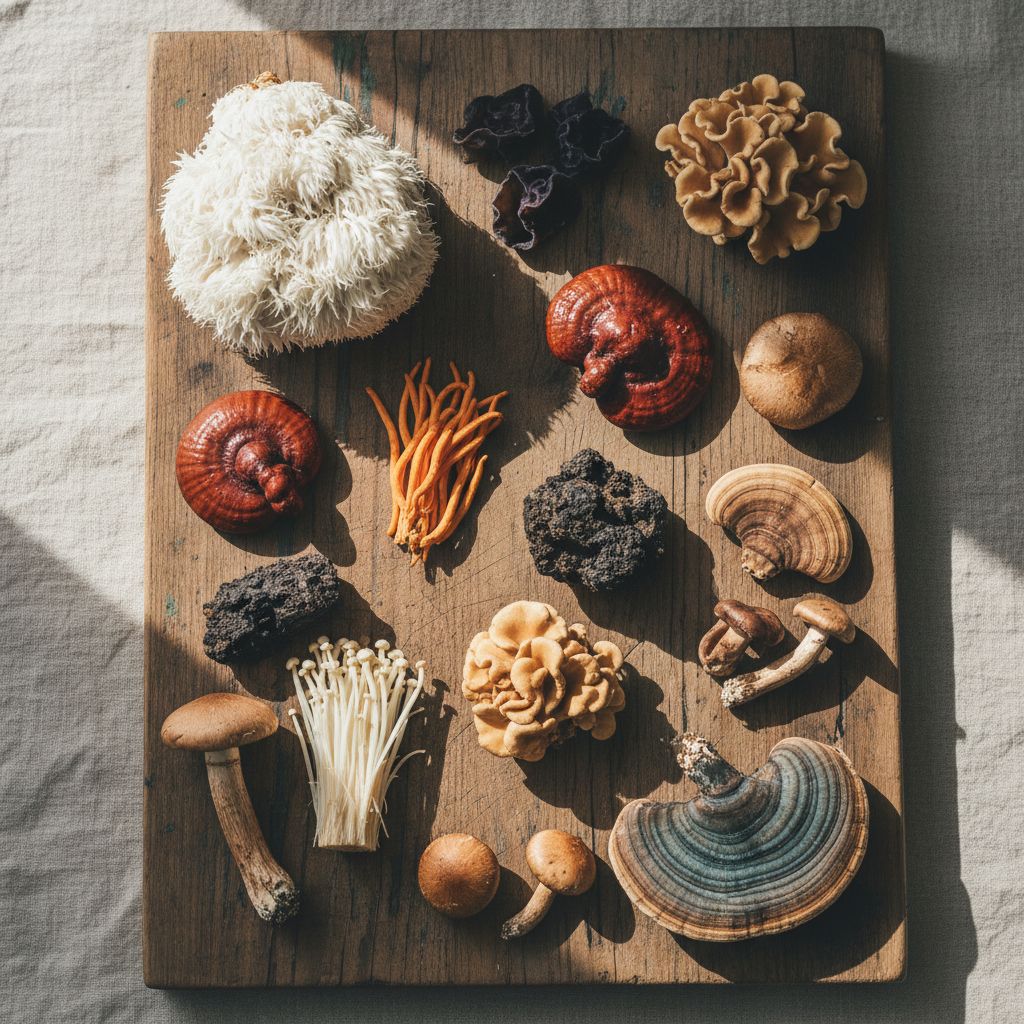
Lion’s Mane is the lead. But the other nine are not filler — they’re a 2,000-year-old orchestra, each instrument playing a role in what your brain actually needs to rebuild. Here is every mushroom in the stack, what it does, and why it’s there.
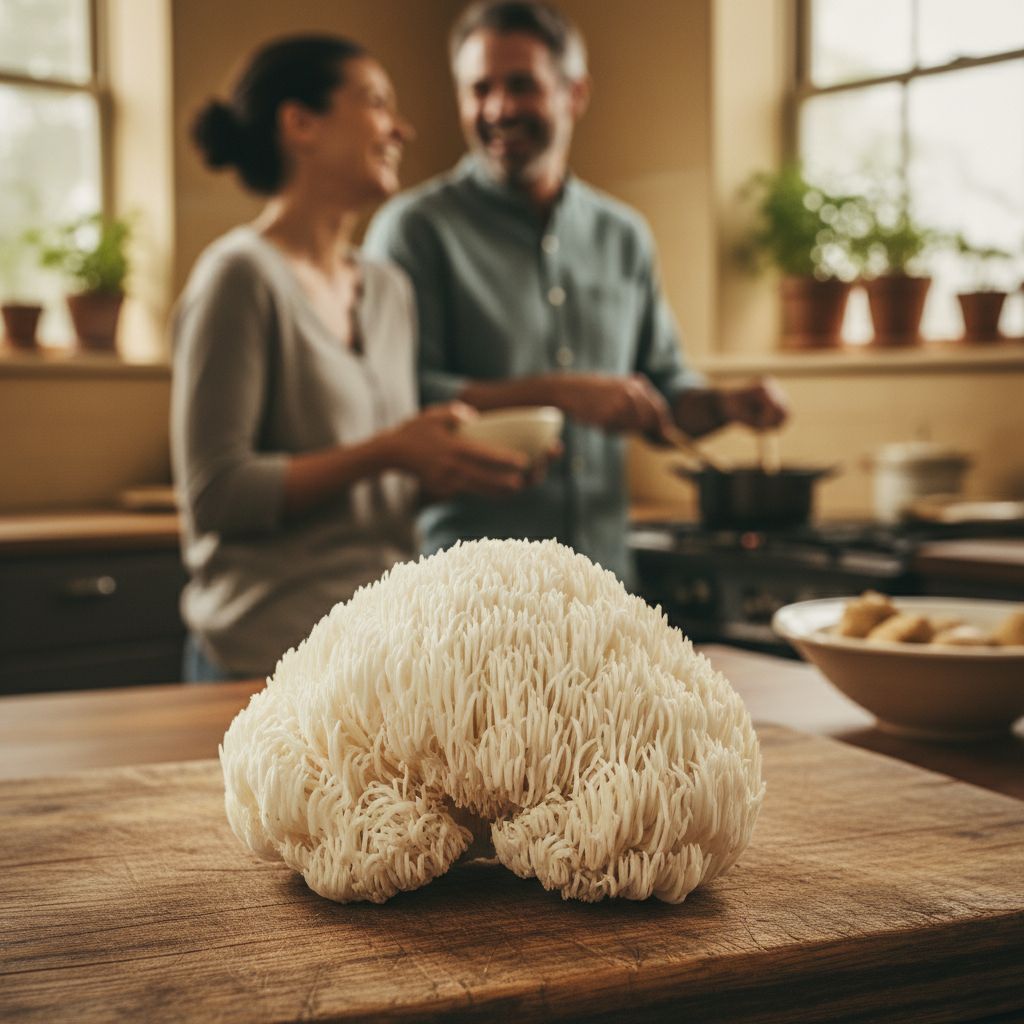
Grows on hardwoods across North America, China, and Japan, looking like a white pom-pom hanging from an oak. Used since the Han Dynasty for “memory and nerve.” Contains hericenones and erinacines, which cross the blood-brain barrier and trigger NGF production in the hippocampus. The mushroom the 2009 Mori trial was built around, and the engine of this stack.
A glossy, red, shelf-like mushroom that grows on dying hemlock and oak in East Asia. Chinese emperors called it ling zhi — “spirit plant” — and reserved it for court use for 2,000 years. Triterpenoids and beta-glucans dampen microglial inflammation — the chronic brain inflammation now linked to Alzheimer’s. Reishi is the fire extinguisher. Lion’s Mane grows new neurons; Reishi keeps inflammation from burning them down.
Grows at 14,000 feet in the Himalayas, harvested by Tibetan yak herders and historically sold for more per ounce than gold. Used for 1,500 years for stamina at altitude. Increases cellular ATP production — the fuel molecule behind every thought. A foggy brain is often an under-fueled brain. Cordyceps is the fuel pump that keeps neurons firing at 3 p.m. when most people collapse.
A black, crusty mass that grows on birch trees in Siberia, northern Canada, and Alaska. The Khanty people have brewed it as tea for centuries for “long life.” One of the highest ORAC antioxidant scores ever measured — roughly 36,000 units per gram, orders of magnitude above blueberries. Protects neurons from the oxidative rust that degrades brain tissue over decades.
A fan-shaped, banded mushroom found on fallen logs worldwide. Studied at Bastyr University, used as an FDA-permitted adjunct in certain cancer trials. Its prebiotic polysaccharides (PSK, PSP) feed the gut bacteria responsible for 90% of your serotonin and major vagus-nerve signaling to the brain. Brain fog often starts in the belly; Turkey Tail repairs the gut-brain channel.
A ruffled, gray-brown cluster nicknamed “hen of the woods,” foraged at the base of oaks in Japan and the American Northeast. 2,000 years of use in Japanese folk medicine. Beta-glucans smooth blood sugar curves. A blood-sugar spike fogs the mind within 20 minutes — Maitake is insurance against the 2 p.m. after-lunch crash that mimics dementia but is really metabolic.
The meaty, umami-rich mushroom your wife probably cooks with, cultivated in Japan and China for 1,000+ years. Quietly, one of the richest natural sources of the B-vitamins needed for acetylcholine synthesis — the exact neurotransmitter Aricept tries to preserve. While Lion’s Mane grows the new wiring, Shiitake supplies the raw material to run the existing wiring.
Native to the hills outside São Paulo, Brazil, where a local population was noted in the 1960s for unusually low rates of stress-related disease. Adopted into Japanese medicine as himematsutake. Modulates the HPA axis and tempers chronic cortisol, which shreds hippocampal neurons over time. Chronic cortisol is a slow memory killer; this mushroom pushes back.
An underground mushroom that grows on pine roots in China, classified in traditional Chinese medicine for 2,000+ years as a “calming the spirit” herb. Used in the sleep formulas prescribed to the Imperial court. Supports GABA signaling — the neurotransmitter that lets your nervous system downshift. Neurogenesis happens mostly during deep sleep, and without sleep, Lion’s Mane has less to work with.
The tiered, oyster-shaped mushroom found on hardwoods across every continent except Antarctica. A staple of Eastern European and Chinese cooking for centuries. Contains lovastatin-like compounds and vascular-supportive beta-glucans that improve blood flow, including to the small vessels feeding the brain. You can grow a garden, but it still needs water lines.
Ten mushrooms. One tradition. One capsule. Six hundred milligrams of 10:1 full-spectrum fruiting body extract per serving.

Last Tuesday, a 68-year-old grandfather from Tulsa named Walter stood in his own kitchen and couldn’t remember why he’d walked in.
It was the third time that week.
His wife Marjorie found him staring at the refrigerator like it was a stranger’s front door. She didn’t say anything. She just squeezed his hand and walked him back to the living room.
But that night, after Walter fell asleep in his recliner, Marjorie sat at the kitchen table and cried until 2 a.m.
Because Marjorie watched her own mother disappear into Alzheimer’s over eleven years. She knows exactly what’s coming.
After her 2 a.m. kitchen-table cry, Marjorie did what conservative American grandmothers do. She did her own damn research. She found Mind Forge 10x. She joined the monthly plan.
She told me she hasn’t cried at the kitchen table since.
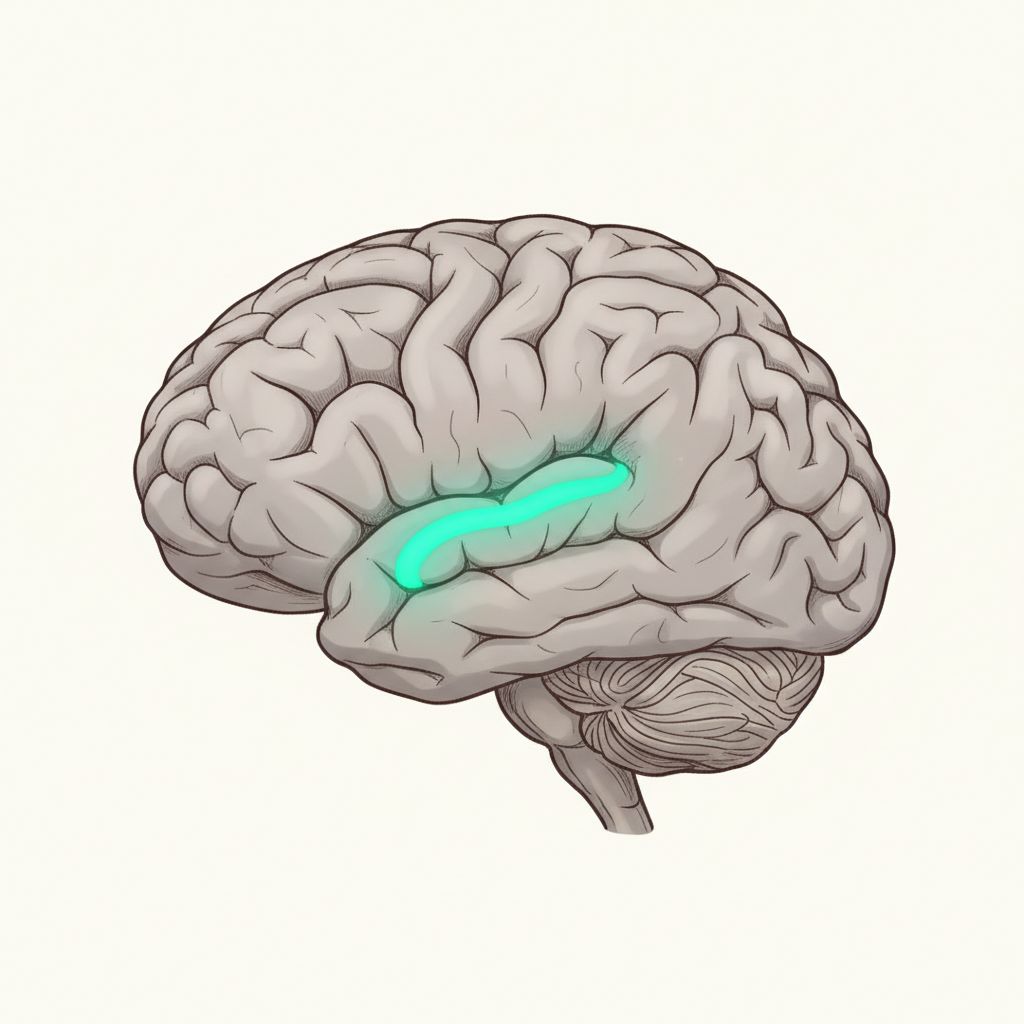
Think of your brain as a garden.
NGF is the water.
Your neurons are the plants.
When you’re 25, the sprinklers are on full blast. Plants thrive. You remember names, phone numbers, the middle chapter of a book you read in college.
At 50, the sprinklers cut to half. Some plants survive. Some wilt. Some die. You walk into a room and forget why.
At 70, the sprinklers are barely dripping. The garden is in survival mode.
The other nine mushrooms in Mind Forge 10x tend the soil — reducing inflammation (Reishi), boosting oxygen delivery to brain tissue (Cordyceps), fighting oxidative damage (Chaga), feeding the gut-brain axis where 90% of serotonin lives (Turkey Tail), steadying blood sugar that fogs the mind within minutes when it spikes (Maitake), and five more.
One mushroom plants the seed. Nine more prepare the soil.
I’m going to tell you what happens if you close this letter and do nothing. Not to scare you — to respect you.
The clinical progression of untreated NGF decline is well-mapped.
That’s where you are if you’re reading this page. You notice things. Others don’t. You keep notes, set extra reminders, blame the wine. Inside, you know something is off.
Your spouse starts noticing. You repeat stories. You miss a payment. The neurologist will call it MCI. What they don’t emphasize: 10 to 15% of MCI patients convert to full dementia every year — and it compounds. Five years in MCI, and more than half have crossed over.
Can’t dress yourself without prompting. Don’t recognize your spouse on bad days. The grandchildren stop visiting because it upsets them. Your wife becomes a 24-hour caregiver. She stops sleeping. She loses weight. She develops her own heart issues.
Stage four — late-stage. Bed-bound. Can’t swallow. Aspiration pneumonia is the most common cause of death. Average survival from diagnosis: 4 to 8 years.
The numbers as of 2023:
Every one of those 6.7 million Americans was, at some point, a 62-year-old standing in a kitchen, holding car keys, trying to remember why they walked in.
I am not saying Mind Forge 10x reverses Alzheimer’s. I would not say that, because it is not what the science supports. What the science does support is that the upstream protein shortage — the one that runs for decades before the diagnosis — is correctable. Correcting it is the only known lever for altering the trajectory.
This is the road — unless something changes.

Bill Harrington. 71. Retired railroad man, 38 years. Scranton, Pennsylvania. Wife Rose of 51 years. A ’72 Mustang he’s been rebuilding in his garage since the Clinton administration.
In 2022, Bill told his doctor he was “losing little things.” Keys. Names at the diner. The doctor ran a short memory test and wrote him Aricept — 5 mg, once daily.
Six weeks in, Bill had lost 14 pounds. He couldn’t sleep. The nightmares were violent — “I was fighting strangers in my sleep and woke up with bruises on my arms from hitting the headboard.” His bowels were so bad he stopped leaving the house. At 3 a.m., his legs cramped with “lightning in my legs, like somebody running jumper cables up my calves.”
The doctor’s answer: “That’s normal. Let’s add something for the cramps and something for the sleep.” A second prescription. Then a third.
Rose will tell you flat-out: Bill was sharper before the pills. In early 2024, he tapered off against medical advice and started Mind Forge 10x, ordered by his daughter-in-law. Six months later, Rose says she has her husband back. He’s finished the Mustang. He sleeps through the night. He remembers the names.

Individual results vary. Testimonials reflect personal experiences, not medical claims. Always consult your physician before making changes to prescribed medications.
I get this question almost daily: “How does Mind Forge compare to what else is out there?” Here’s the honest answer, side by side. Make up your own mind.
| Factor | Mind Forge 10x | Aricept / Donepezil | Amazon Lion’s Mane | Single-Species Supplement | Doing Nothing |
|---|---|---|---|---|---|
| Monthly cost | $39 | ~$400 | ~$19 | ~$35 | $0 / $345B nationally |
| Mechanism | NGF production | Acetylcholine boost | Inconsistent | Partial | None |
| Grows new neurons | Yes | No | Unclear | Possibly | No |
| Side effects | None reported | Nightmares, GI, cramps, weight loss | Generally none | Generally none | The disease itself |
| Prescription required | No | Yes | No | No | — |
| Full-spectrum synergy | 10 mushrooms | Single molecule | One mushroom | One mushroom | — |
| 10:1 fruiting body extract | Yes, 600mg | N/A | Usually mycelium on grain | Varies | — |
| 2,000-year track record | Yes | No (FDA 1996) | Partial | Partial | — |
| Made in USA | Yes, GMP-certified | Yes | Often overseas | Varies | — |
| 60-day guarantee | Empty bottles OK | No | Usually no | Varies | — |
The $19 Amazon bottle looks like a deal until you read the label. What you’re buying is almost always mycelium grown on oats, ground up and capsuled — oats with a dusting of mushroom. The actual bioactive compounds are in the fruiting body. Mind Forge uses fruiting body extract only, 10:1, standardized.
Five objections that come up most often, with the straight answer to each.
I understand the instinct. “Mushroom” + “brain” sounds like Silicon Valley biohackers. Let me reframe the history. Lion’s Mane was consumed by Chinese emperors starting in the Han Dynasty (206 BC). Buddhist monks carried it into Japanese medicine in the 9th century. Samurai chewed it before battle. The mechanism was characterized in a straight-laced Japanese university lab in 1991. The foundational protein — NGF — was discovered by a Nobel-laureate Jewish grandmother in a bedroom during WWII. Silicon Valley is a thousand years late. The monks and the Nobel committees were here first.
I believe you — and I can tell you almost certainly why. If you bought a $19 bottle off Amazon, there’s about an 85% chance you were consuming mycelium grown on grain — essentially, oats with mushroom dust. The actual active compounds (hericenones, erinacines, high-density beta-glucans) are in the fruiting body, which is expensive to grow and rare at pharmaceutical concentration. Mind Forge 10x is 600mg of 10:1 fruiting body extract — 6 grams of raw fruiting body concentrated into each dose. No grain. No filler. This is why it works when the others didn’t.
Talk to your doctor first. That is a conversation, not an internet decision. With that said: Mind Forge operates on a completely different mechanism (NGF / neurogenesis) than cholinesterase inhibitors, so most doctors open to the question allow cautious concurrent use. Most of our customers on Aricept transitioned over about six months, gradually reducing the prescription under medical supervision while maintaining Mind Forge. Never stop Aricept abruptly. Rebound cognitive decline is real. Taper under a physician’s care.
The most important objection I get. Mind Forge 10x is not for dementia patients. By the time dementia shows up clinically, NGF has been collapsing for 15 to 25 years. The cognitive inflection point — the cliff — happens between 45 and 55. Waiting until dementia to start supporting NGF is like waiting until your first heart attack to start exercising. The whole point is to catch the decline while it’s still quiet.
Heard it thousands of times, usually from men. The math: $39 a month — about a dollar a day — against the $400/month Aricept script you’re likely to end up with if you wait. Cheaper than a weekly cup of coffee. And the 60-day empty-bottle guarantee means zero financial risk — if your spouse isn’t convinced at day 59, you send back the empty bottle and we refund every dollar. What I hear from member letters: the spouse who was skeptical at month one is almost always the loudest advocate by month four. Because they see you whistling again.
60-day empty-bottle money-back guarantee · Cancel anytime in one click · 3 free bonus guides ($93 value)
When you order today, I’m including three PDF guides I’ve never made available outside of FixityHealth members. You’ll get them by email within 10 minutes of checkout.
The NGF Protocol Guide
A 43-page guide to maximizing Lion’s Mane absorption: which foods create synergy, which habits block uptake, and the sleep architecture changes that flip the switch on overnight neurogenesis. Includes the dosing protocol we recommend for 50s, 60s, and 70s.
The Brain Food Grocery List
A printable shopping list of the 40 foods that actively feed NGF production — and the 25 foods that quietly destroy it. Most of the destroyers are in every American pantry. Slip it in your wallet and take it to Kroger this weekend.
The 30-Day Memory Challenge
A daily workbook of short exercises — name recall, word fluency, working memory — paired with your Mind Forge dosing schedule. Track your score at day 0, 15, and 30. Seeing your own score climb is, for most people, the moment they know.
Total bonus value: $93. Yours free with any order today.
Honest word about why this matters now, not three months from now.
10:1 Lion’s Mane fruiting body extract at pharmaceutical grade is not something you manufacture in a New Jersey warehouse. There are three facilities in the world that produce it to the standard Mind Forge requires — two in East Asia, one contract partner in North America. Our current batch was locked in at March 2026 pricing. The next batch — already on order — will cost us 17% more, due to harvest constraints.
The commitment: if you start your plan during the current batch, your $39/month price is locked in for the lifetime of that plan. Not for a year — for as long as you keep it active. New members after this batch sells through will start at the higher price.
I’m not going to play games with countdown timers. I’m telling you the supply truth, and you can decide.
Neurogenesis is slow and beautiful. The 2020 Lion’s Mane Alzheimer’s study ran 49 weeks to reach statistical significance. The brain doesn’t rebuild in a week. It rebuilds in months.
The plan isn’t a marketing trick. It’s the protocol that actually works. Most of our customers see meaningful improvement between day 60 and day 120 — the window where NGF production ramps back up and new neural connections start forming. Coming off the protocol at day 30 is like stopping antibiotics halfway through.
Cancel anytime. Free shipping every month. $39 flat.

Take Mind Forge 10x for up to 60 days. Take it every day. Give it a fair shot.
If your memory isn’t sharper, your focus isn’t cleaner, and you don’t feel the fog lifting — send back the bottles, even if they’re empty, and we refund every dollar you paid. No restocking fee. No “are you sure?” phone call. No interrogation.
And if you can explain to me why any rational American over 60 would choose a $400 Aricept prescription (which doesn’t reverse anything) over a 2,000-year-old mushroom stack with peer-reviewed clinical data and an empty-bottle refund policy — I’ll buy you dinner.
Option one: Close this letter. Go back to the pharma toll booth. Hope the fog doesn’t thicken. Hope your mother’s path isn’t yours. Hope.
Option two: Try Mind Forge 10x for 60 days. Risk nothing. Feel the difference, or get your money back.
One of these options protects the pharmaceutical industry’s quarterly earnings. The other one protects you.
Click the button below. The monthly plan is where the real neurogenesis happens.
Your brain has been waiting for this protein for a long time.
Let’s turn the sprinklers back on.
Most members report a subtle lift in the 2 p.m. fog within 14 to 21 days — usually a spouse notices first. Name recall and sharpness typically improve between days 60 and 120, when new connections form. Neurogenesis is slow and steady, not a stimulant buzz.
Yes — ideally with a meal containing healthy fat (eggs, avocado, olive oil, salmon). Hericenones and erinacines are fat-soluble, so absorption roughly doubles versus an empty stomach. Morning or early afternoon is best. Avoid within two hours of bedtime for the first two weeks — a small number of users report vivid dreams while the brain adjusts.
For most people, yes — but run it by your doctor first, especially if you’re on blood thinners, diabetes medication, or any cholinesterase inhibitor (Aricept, Razadyne, Exelon). Mind Forge doesn’t compete at the same receptor, but blood-sugar medications may need a slight adjustment since Maitake is mildly glucose-stabilizing.
Yes. Lion’s Mane has a 2,000-year safety record in Chinese and Japanese medicine and an excellent modern toxicology profile. Long-term daily use is the protocol we recommend. Our oldest continuous member has been on Mind Forge almost four years with no adverse effects reported.
No. Zero caffeine, zero stimulant. If anything, the Reishi and Poria support calmer sleep. Under 5% of users report vivid dreams during the first 2–3 weeks, which typically settles on its own.
Stay on it. The real window is days 60 to 120. Your spouse will usually notice before you do — ask them at week 6, without telling them what to look for. If at day 59 you still feel nothing, send back the empty bottles and we refund every dollar. No interrogation.
The 2020 Li trial was conducted specifically on adults with mild cognitive impairment — that is the population where significant improvement was demonstrated. Talk to your neurologist first, bring the study, and never discontinue an existing medication without their supervision.
Culinary mushroom allergies are usually reactions to proteins or mold contamination. A 10:1 fruiting body extract has those proteins largely removed in extraction. If you have a documented mushroom allergy, check with your allergist first and start with a half dose for the first week.
Manufactured in an FDA-registered, GMP-certified U.S. facility. Every batch is third-party tested for heavy metals, pesticides, microbial contamination, and compound standardization. Certificate of analysis available on request.
Yes, exactly as stated. Take it for up to 60 days. If it doesn’t deliver, mail back the bottles — full, half-empty, or completely empty — and we refund every dollar. No restocking fee. No survey. No phone call. It’s the policy I’d want my own mother to have.
To your sharpest years,

Mark Edwards
Founder, Fixity Health
Orlando, Florida
P.S. If you’ve read this far — still reading, all the way to the bottom — I want you to know something. The fact that you did is itself a sign. The brain that is gone does not finish letters. You are not gone. You are tired, and scared, and under-fed at the cellular level, and you have been told for ten years that nothing can be done. Something can be done. Start with one bottle if that’s all you can do tonight. Choose the plan if you want the real window. But please — for the grandchild whose name you will say — start.
P.P.S. Remember: NGF is not theory. It won a Nobel Prize. Lion’s Mane’s effect on NGF is not theory — it’s documented in a 2020 peer-reviewed Japanese trial on adults with mild cognitive impairment. What IS new is that, for the first time, all ten traditional cognitive mushrooms are available in one American-made, GMP-certified capsule at $39 a month with free shipping. You don’t have to forage. You don’t have to fly to Kyoto. You just have to decide.
P.P.P.S. My father, Tom Edwards, doesn’t get to read this letter. He died before we built it. If he were alive, I’d mail him a bottle, not a link. If you have a father, or a mother, or a spouse in the window — please, forward this to them. The letter is free. The bottle is $39. And the grandchild’s name they will one day say is priceless.