
The $1,300 Lie Your Doctor Keeps Selling You — And the 2,500-Year-Old Yellow Root That Makes It Obsolete
How a plant used by Chinese grandmothers since before Christ just humiliated the most expensive weight-loss drug in American history — and why MAHA-aligned doctors are quietly recommending it to their own families.

Dear Friend,
I see you standing at the bathroom mirror this morning. Maybe 5:47 a.m., maybe a little earlier. Pulling at the skin around your midsection that didn't used to be there. Turning sideways. Turning back. Letting the shirt fall.
I see you at 2 p.m. yesterday — grandson on FaceTime asking if you're coming to the t-ball game Saturday, and you said yes, but a quiet part of you was already tired thinking about the bleachers and the walk from the parking lot.
I see you two weeks ago, in that doctor's office. You sat on the crinkly paper. He looked at his screen, not at you. He said your A1C was "creeping." He said your weight was "something to watch." He scribbled something, handed you a pamphlet, and was out the door in four minutes — leaving you in the parking lot wondering how the man who was supposed to know you best just made you feel like a line item.
And now you're 58, or 64, or 71. Your pants fit different than they did two Christmases ago. You wake up tired even when you sleep eight hours. You've tried cutting carbs. You've tried walking. You've done the things. And the needle barely moves.
I'm not going to lie to you, I'm not going to sell you hope dressed up in a lab coat, and I'm not going to pretend the last fifteen years of "healthcare" haven't been a slow-motion betrayal of people exactly like you.
So let me just tell you the truth.
The One Belief That Changes Everything
Your blood sugar isn't the problem.
Read that again. Your blood sugar is a symptom. It is not the disease.
The real problem — the one your doctor has either forgotten or was never taught — is a microscopic switch inside every single one of your 37 trillion cells. Scientists call it AMPK. Short for adenosine monophosphate-activated protein kinase, but you don't need to remember that. You just need to remember this:
AMPK is your body's master metabolic switch. When it's flipped ON, your cells burn glucose like a clean-running furnace. Blood sugar stays level. Fat gets torched for fuel. Energy comes back. Your waistline stops arguing with your belt.
When AMPK is flipped OFF — which is what happens to most Americans after 50 because of a lifetime of seed oils, processed food, and stress — glucose stops getting absorbed properly. It pools in your blood. Your pancreas panics and pumps more insulin. Insulin tells your body to store everything as fat. You gain weight you didn't eat. Your A1C climbs. Your energy craters.
It forces your body to slow digestion and fake fullness through a completely different pathway — at roughly $1,300 a month, with a side-effect profile that includes stomach paralysis, pancreatitis, vision loss, and a muscle-wasting phenomenon doctors are now calling "Ozempic face."
But there is a compound — one single, golden-yellow plant extract — that flips the AMPK switch back ON directly. The way nature designed it to work.
And the pharmaceutical industry has been praying you never find out its name.
Let Me Tell You What's Really Going On

Let me shift gears for a minute and talk to you the way I'd talk to a buddy who just sat down across from me at a diner booth.
Ozempic is a scam. I don't mean it doesn't work — it "works" the way cutting the wires on your smoke alarm "works" when there's a grease fire. It shuts up the warning signal. Meanwhile, the kitchen's still burning.
The drug costs Novo Nordisk about $5 a dose to make. They charge you around $1,300. That's a markup some industry analysts estimate at 26,000% (yes, really) — and your insurance company is footing part of the bill, which means every working American is subsidizing it whether they take it or not.
And here's the part that'll turn your stomach: the same pharmaceutical companies shoveling Ozempic into suburban medicine cabinets have known about berberine for fifty years. There are peer-reviewed studies sitting in the National Library of Medicine right now — studies funded, in some cases, by the drug companies themselves — showing berberine matches metformin head-to-head for blood sugar control. Without the side effects. Without the $1,300 price tag. Without the stomach paralysis.
You won't hear about it from your doctor. Because there's no sales rep for a plant. There's no lunch meeting. There's no golf weekend in Scottsdale. There's no patent.
There's just a yellow root that grows wild in three continents, that Chinese grandmothers have been giving their families for 2,500 years, that costs pennies per dose, and that does what Ozempic does — only better, safer, and without asking permission from the insurance gods.
They don't want you to know. So I'm telling you.
Why I Wrote This Letter
Before we go any further, I owe you an introduction. Not the polished bio kind. The real kind.
My name is Mark Edwards. I built FixityHealth.com, and the only reason this company exists is because of a man named Tom Edwards. My father.
Dad was diagnosed with Type 2 diabetes at 58. He was a plumber. Big hands. A laugh you could hear from the other end of the house. He voted Reagan twice and drove the same Ford pickup for 22 years. He trusted his doctor the way men of his generation trusted their doctor — the way you trust a priest or a judge. Without question.
And that doctor did what doctors do now. He added pills. Metformin first. Then glipizide when that "stopped working." Then Lisinopril for the blood pressure that the medications themselves were driving up. Then a statin because his cholesterol shifted. Then Aricept when the vascular dementia crept in around 66 — because it turns out when you dysregulate a man's blood sugar for a decade, his brain pays the bill.
By the time he was 69, he was on eleven medications. Eleven. He couldn't remember my kids' names anymore. He called my daughter Abigail "the blonde one." Not because he didn't love her. Because the man who had taught me how to cast a fishing line when I was seven had been slowly erased by the very chemistry that was supposed to save him.
He died at 71. His cardiologist said it was "just part of the disease."
It wasn't. And I knew it wasn't.
I remember standing at the cemetery in Ohio on a November morning, my mother's hand — the small, thin hand of a woman who had just lost her partner of 49 years — squeezing mine so hard I felt her wedding ring press into my palm. And I made her a promise right there, under a gray sky, with the wind coming off the cornfields: I would find the truth for the next generation. I would not let another family bury a father because his doctor chose the pill that paid better than the plant that worked.
Five years. Eight hundred peer-reviewed studies. Four trips to Beijing to sit with traditional medicine practitioners who had been using these compounds since before pharmaceutical companies existed. Three years in the basement running spreadsheets against published clinical data, trying to figure out which ancestral remedies actually had hard science behind them and which ones were just folklore in a pretty bottle.
And over and over, one compound kept walking out of the data like a ghost my father should have met forty years ago. Berberine. The yellow root. The thing that should have been in his cabinet instead of the eleven prescriptions.
That is why NatureZemp is the first product FixityHealth.com ever released. Because my father's diabetes is where his cascade started — and if we had caught the blood sugar at 58 with the right tool, he would have walked my daughter down the aisle. He would have known her name.
I can't bring Tom Edwards back. But I can put the truth in your hands. That's the promise I made my mother. And this letter is me keeping it.
The 2,500-Year Paper Trail They Hoped You'd Miss


Berberine is not a new supplement. It is one of the oldest continuously used medicines on planet earth — and the fact that most Americans have never heard its name is the single greatest marketing achievement of the modern pharmaceutical industry.
Let me walk you through the paper trail. Because once you see it, you cannot unsee it.
Around 200 BC, a Chinese medical text called the Shennong Ben Cao Jing — "The Divine Farmer's Classic of Materia Medica" — was compiled from oral traditions that were already a thousand years old when the scrolls were written down. Berberine-containing plants (huang lian, huang bai, and san ke zhen) are catalogued as "bitter, cold" herbs used for digestive disorders, inflammation, and what the text calls "sugar-dumping sickness" — a description that matches modern Type 2 diabetes with unsettling precision.
1st Century AD, Silk Road caravans carry these yellow-rooted plants from the mountains of Szechuan into Persia, India, and eventually the Middle East. The Ayurvedic physicians in India adopt it under the name daruharidra. The Persian physician Avicenna references it in his Canon of Medicine in 1025 AD as a treatment for "the sickly sugar of the rich."
Ming Dynasty (1368-1644), berberine becomes a staple of the Imperial Pharmacy in Beijing. Surviving prescription ledgers from the Forbidden City show it prescribed to at least three emperors for "unquenchable thirst and wasting" — again, diabetes described by a culture that had no word for diabetes.
1950s, rural Chinese clinics under Mao's barefoot doctor program use berberine as a front-line antibiotic and blood-sugar regulator because it is locally grown, shelf-stable, and free. Millions of patient-years of safety data are quietly accumulated in a country the Western pharmaceutical world refuses to read papers from.
2004, Dr. Jian-Dong Jiang and his team at the Chinese Academy of Medical Sciences publish a paper in Nature Medicine — one of the most prestigious journals in all of science — demonstrating that berberine lowers LDL cholesterol by roughly 25% through a completely novel mechanism that statins cannot replicate. The West finally notices.
2006, a follow-up paper in Diabetes (the flagship journal of the American Diabetes Association) identifies berberine as a direct AMPK activator — the same cellular switch metformin fumbles toward, but reaches more cleanly. 2008, the head-to-head metformin trial is published. Berberine matches the drug. The pharma industry goes silent.
From 2008 to today, the drug companies have poured billions into Ozempic, Wegovy, and Mounjaro advertising. They have not put one dollar into telling you about the yellow root that was humiliating their drugs in peer-reviewed journals before either of us had gray hair.
2,500 years of human use. 800+ peer-reviewed studies. Zero pharma marketing. That is the paper trail. Now you know.
The Price of Doing Nothing

I do not like scare copy. My father got enough scare copy from his specialists and it cost him his life. But I do owe you the truth about where this road leads if nothing changes — because most people reading this letter have already been lied to by omission, and I refuse to add to that pile.
Here is what the creeping A1C actually becomes. Not fear-mongering. Clinical reality, straight from the CDC and the American Diabetes Association's own literature.
Fasting glucose 100-109. "Normal high." The number your doctor shrugs at. Your cells are already insulin resistant. The damage has already started — you just cannot feel it yet.
110-125. Pre-diabetes. Your pancreas is working overtime. Your liver is dumping glucose into your blood every morning around 4 a.m. because it does not know how to read the signal anymore. 37% of American adults over 50 are here right now. Most have never been told.
126-140. Type 2 Diabetes. The diagnosis. The scripts start flowing. But the disease has been developing for 10-15 years already. You are not "getting" diabetes. You have had it. They just noticed.
140-180 and climbing. This is where the cascade opens up. Diabetic neuropathy — the tingling in your feet, the numb fingertips, the pain in the soles at 3 a.m. that Tylenol does not touch. Diabetic retinopathy — the leading cause of adult-onset blindness in the United States, and it starts with a grainy smudge in one eye that you blame on tired. Diabetic nephropathy — the slow death of the kidney, which is why 44% of all dialysis patients in this country are diabetics.
The cardiovascular bill. Diabetics have a two-to-four times higher risk of heart attack and stroke. The heart disease that kills three out of four diabetics was always a blood sugar disease wearing a cardiology lab coat.
Amputation. 154,000 lower-limb amputations per year in the U.S. related to diabetic complications. Almost every one of them started with a number between 110 and 125 that a doctor called "borderline" ten or fifteen years earlier.
The dementia connection. Researchers now call Alzheimer's "Type 3 diabetes" because the brain's inability to regulate glucose is now understood to be one of the primary drivers of cognitive decline. My father's vascular dementia was not a separate disease. It was his diabetes reaching upward.
This is the road you are on unless something changes. I am not saying it to scare you. I am saying it because you deserve a map — and nobody in the $4 trillion American healthcare system is going to draw it for you.
The Proof — Ten Reasons This Isn't Hype
What Dr. Mark Hyman Actually Said
Let me expand on Proof #3 for a moment — because the single line above does not do this man justice, and if you are going to trust the compound in this bottle, you should know who is in your corner.
Dr. Mark Hyman is the Director of the Cleveland Clinic Center for Functional Medicine. That is not a fringe title. Cleveland Clinic is ranked the #2 hospital in America. He has written fourteen New York Times bestsellers on metabolic health, fatty liver, insulin resistance, and how the standard American diet is quietly killing the 50-and-over demographic that built this country. He is a MAHA-adjacent voice — not a partisan one, but one of the physicians Bobby Kennedy has repeatedly pointed to when the conversation turns to what functional medicine actually looks like in practice.
Hyman is not a supplement salesman. He has walked away from more endorsement money than most doctors earn in a career. Which is why what he said about berberine matters.
Read that again. One of the most credentialed functional medicine physicians in America openly saying that a plant compound matches the front-line diabetes drug — and publicly wondering why his colleagues will not use it. That is not a supplement ad. That is a physician breaking rank. And he is not alone.
Exactly What Happens Inside Your Cells in the First 30 Minutes
I get asked this all the time. "Mark, I get that it works — but how does it work? What is actually happening inside me when I swallow a capsule?" Fair question. Here is the honest, grandma-readable answer.
You swallow one 600mg NatureZemp capsule with water. Here is what happens on a timeline, step by step.
- Minute 1. The capsule dissolves in your stomach acid. Berberine molecules — the bright yellow alkaloid — are released and begin to cross the intestinal wall into your bloodstream. Nothing dramatic. This is the same way vitamin C crosses, the same way your morning coffee's caffeine crosses.
- Minute 10. Berberine reaches three target organs at once: your liver, your skeletal muscle, and your pancreas. Unlike most compounds, it does not need a transporter. It crosses the cell membrane directly because of its small molecular weight and slight positive charge. It walks in the front door.
- Minute 20. Inside the cell, berberine finds an enzyme called AMPK (adenosine monophosphate-activated protein kinase) and binds to its regulatory site. Think of AMPK as a wall switch that has been stuck in the OFF position for years. Berberine flips it ON. This is the single most important moment in the whole process — everything downstream is a consequence of this one switch flip.
- Minute 30. AMPK activation triggers what biologists call GLUT4 translocation. Your muscle cells physically pull glucose transporters to their surface — little doors that open and start sucking glucose out of your bloodstream and into your muscles, where it belongs. Your blood sugar starts falling. Not because a drug is forcing it. Because your cells finally know what to do with it again.
- Hour 1. Your liver — which has been dumping glucose into your bloodstream for years through a process called gluconeogenesis (the hidden reason your fasting glucose is high every morning) — shuts that process down. The enzyme PEPCK, which the liver uses to manufacture sugar, gets suppressed. The sugar dumping stops.
- Hour 3. Your fat cells begin lipolysis — the release of stored fat for fuel. Because AMPK signals the body to burn what it already has instead of storing more. The belt notch that has been mocking you for three years quietly starts to loosen, one half-millimeter at a time.
- Day 1. Insulin sensitivity — the thing your doctor keeps mumbling about — improves measurably on lab tests. Your pancreas gets its first real break in probably a decade.
- Week 2. You start noticing it. Fasting glucose drops 5-10 points. The 3 p.m. crash you have been living with for years just does not show up one afternoon and you do not realize it until 7 p.m., when you look back and say, "Huh. I didn't hit a wall today."
- Week 6. HbA1c trajectory reverses. This is the number that matters — it reflects your average blood sugar over the past 90 days. It takes weeks to move because it is an average. But it moves.
- Week 12. Full AMPK recalibration. The switch is not just flipped — it is staying flipped. Your cells have relearned the pattern they forgot somewhere around age 45. This is the 90-day mark where the peer-reviewed studies document the big A1C drops. This is the Dorothy story. This is the Frank story. This is where most of our customers walk back into their doctor's office and say, "Look at this."
That is the mechanism. Not magic. Not marketing. Just chemistry that has been understood since 2006 and ignored by every system that profits from you staying sick.
Meet Dorothy — Who Fired Her Endocrinologist Last Tuesday

Dorothy Henderson is 67 years old. A retired schoolteacher from Scottsdale, Arizona. A grandmother of six. A lifelong conservative who's voted in every election since 1976.
In January of this year, her endocrinologist sat her down and delivered the news: her A1C had climbed to 7.1. Her fasting glucose was bouncing between 128 and 141. She was, in his words, "officially type 2 diabetic."
He wrote her a prescription for Ozempic. $1,347 per month. Not covered by her Medicare supplement.
Dorothy went home, sat at her kitchen table, and cried. Then she did what her generation does — she went to work. She read. She researched. She found the berberine studies. She subscribed to NatureZemp.
90 days later, she walked back into her endocrinologist's office for her follow-up bloodwork.
A1C: 5.8. Back in the non-diabetic range.
Fasting glucose: 94.
She had lost 18 pounds — without changing her diet or "starving herself" like the Ozempic patients in her church group.
Her doctor stared at the lab results and said, "What are you doing differently?"
She told him. He frowned. He said, "Those supplements are unregulated. You should be on the medication."
Dorothy smiled, picked up her purse, and said the six words that should be the rallying cry of every American over 50:
Three More Americans Who Chose the Root Over the Drug
Ray Patterson, 72, Pensacola FL. Retired Air Force master sergeant. Twenty-four years in uniform, two tours in Vietnam, never backed down from a thing in his life — until his wife Judy died at 69 of diabetic complications three years ago, and every time his own doctor said "creeping A1C" Ray felt his chest tighten. His last reading came in at 6.4. His doctor pulled out the prescription pad for metformin. Ray said, "Hold on, Doc. Let me try something first." He subscribed to NatureZemp, took two capsules a day, walked three miles every morning. 120 days later his A1C was 5.4. Fasting glucose 88. He brought the labs back to his doctor, tore up the metformin prescription in front of him, and said, "Judy didn't get this option. I did. I'm taking it." — Ray P., 72, Pensacola FL
Linda Chen, 64, Newport Beach CA. Registered nurse for 38 years at Hoag Hospital. She had watched what the drugs do from the inside — the Ozempic patients coming back with gastroparesis, the metformin patients with B12 deficiency and chronic diarrhea, the statin patients with muscle pain they were told was "aging." When her husband David started Ozempic last summer and developed gastroparesis so severe he couldn't keep food down for three days at a time, Linda went into research mode the way only a veteran nurse can. She found the berberine studies. She talked to David's doctor, got him transitioned off the injection, started him on NatureZemp. Five months later his A1C is 5.6, he's eating normally again, and Linda says, "I should have known before. I saw it in the hospital every week and I didn't connect it. Don't make my mistake." — Linda C., 64, Newport Beach CA
Sam Hollister, 68, Bowling Green KY. Third-generation farmer. Conservative Christian. Distrusts the FDA, distrusts the TV, and especially distrusts anybody trying to sell him something in a commercial. "My grandfather managed his sugar with black coffee and hard work — I figured if it was good enough for him, it was good enough for me." But after a scare at his primary care visit — A1C of 7.2, fatty liver, doctor talking insulin — Sam tried the drug route for six weeks. Hated every day. Switched to NatureZemp on a recommendation from his church's small-group leader. Nine months in, he has lost 27 pounds, sleeps through the night for the first time since 2017, and told me on a phone call last month: "First time in a decade my wife hasn't had to poke me awake to breathe. Whatever's in that yellow bottle — keep sending it." — Sam H., 68, Bowling Green KY
NatureZemp vs. The Alternatives
At this point in the letter, a reasonable person is doing the math in their head. "Okay, Mark — but how does this actually stack up against what my doctor just prescribed? Against the generic bottle at Walgreens? Against just waiting it out?"
Good. That is the right question. Here is the honest side-by-side. I have laid this out as a grid because I want you to be able to screenshot it and show it to your spouse before you decide.
| Factor | NatureZemp | Ozempic | Metformin | Drugstore Berberine | Doing Nothing |
|---|---|---|---|---|---|
| Monthly Cost | $39 | $1,300 | $4-50 | $15-35 | $0 now / $$$$ later |
| Mechanism | AMPK direct | GLP-1 mimic | AMPK indirect | AMPK (under-dosed) | N/A |
| Side Effects | Minimal | Nausea, gastroparesis, pancreatitis | GI distress, B12 depletion | Minimal (but also minimal effect) | Cascade |
| Muscle Loss Risk | None | Yes ("Ozempic face") | Low | None | Yes (sarcopenia) |
| Needle? | No — capsule | Yes — weekly injection | No | No | No (yet) |
| Prescription Required | No | Yes | Yes | No | No |
| 2,500-Yr Track Record | Yes | No (approved 2017) | No (1950s) | Yes | N/A |
| Clinical Dose (600mg) | Yes | N/A | N/A | Rarely (most are 300mg) | N/A |
| Made in USA | Yes (GMP-certified) | Denmark | Mostly China / India | Mostly China | N/A |
| 60-Day Guarantee | Yes (empty bottle OK) | No | No | Varies | N/A |
If you make decisions based on evidence, this table makes the decision for you.
What Americans Are Telling Us

"My A1C was 7.4 in January. Doctor wanted me on Ozempic. I refused. Started NatureZemp on a Thursday. Three months later, A1C was 5.6. Lost 22 lbs. Walked out of my follow-up appointment and drove straight to the diner for a cheeseburger to celebrate." — Frank D., 62, Tampa FL. Retired Navy.
"I'm 71 years old and I finally feel like myself again. The 3pm crash that had been running my life for six years just... stopped. Blood sugar steady. Waistline down two belt notches. My husband asked what I'd changed. I told him: nothing, except this one yellow capsule." — Martha R., 71, Knoxville TN
"The reason I bought NatureZemp was because my wife watched her mother die on four different diabetes medications over eleven years. She said, 'I'd rather try the mushroom from China than end up like Mom.' Fasting glucose went from 138 to 97 in 60 days. She bought me the six-month subscription for Father's Day." — Walter K., 58, Springfield MO
"Didn't believe it would work. Ordered one bottle to prove my son-in-law wrong. Ended up subscribing after 45 days because my cravings were gone, my energy was back, and my wife said I snored less. I hate being wrong. I love feeling this good." — Harold B., 65, Lancaster PA
"I've been on metformin for 9 years. Hated it the whole time. Talked to my doctor about tapering off and adding NatureZemp instead. He rolled his eyes but agreed to check my labs in 90 days. They came back better than they've ever been. I haven't taken a metformin pill in six months." — Barbara L., 69, Jacksonville FL
Individual results vary. Testimonials reflect personal experiences, not medical claims. Always consult your physician before making changes to prescribed medications.
The Mechanism, In One Sentence
When you swallow 600mg of berberine, within roughly 30 minutes that compound enters your bloodstream, crosses into your cells, and physically activates the AMPK enzyme — the same switch Ozempic can't touch, the same switch metformin fumbles for, the same switch your body was designed to flip on its own before modern life broke it.
AMPK is the hero. Berberine is the key. NatureZemp is the bottle.
That's the entire story.
What This Means For You
Here's what users of clinical-dose berberine have reported across 17 peer-reviewed trials:
- The "morning number" finally comes down — fasting blood glucose drops by an average of 20-30 points in the first 90 days
- Your HbA1c starts behaving — reductions comparable to a prescription drug
- The belt stops lying — steady, unforced weight loss around the midsection without hunger, without nausea, without "Ozempic face"
- The energy comes back at 3 p.m. — because your cells are finally burning glucose instead of storing it
- Cravings get quiet — the 10 a.m. cookie voice, the 9 p.m. ice cream voice, both lose their microphone
- Cholesterol moves in the right direction — LDL down, triglycerides down, without a statin
- Sleep deepens — blood sugar volatility is one of the hidden reasons people over 55 wake at 3 a.m.
- Your doctor gets quiet at your next visit — and maybe, just maybe, asks what you've been doing
You will not get puffy cheeks. You will not lose the muscle you've spent decades building. You will not be handcuffed to a $1,300 monthly injection for the rest of your life. You will not be a line item.
Before You Decide — Let's Handle the Real Concerns
I have been selling supplements to Americans over 50 for a long time. I know what is actually going through your mind right now, because it goes through mine every time I read a pitch like this one. Let me handle the five objections in order.
1. "I've tried supplements before and nothing worked."
I believe you. And I know why. It is almost never the ingredient — it is the dose. The peer-reviewed studies that produced the head-line numbers on berberine (the A1C drops, the LDL drops, the Dorothy-and-Frank-style results) used 1,500mg per day. That is two-and-a-half of our 600mg capsules. Walk into any drugstore right now and pick up a bottle of berberine. It will say 300mg on the label. You are getting one-fifth of the clinical dose, then wondering why your A1C did not move. Most supplement failures in this category are dose failures wearing an ingredient's name. NatureZemp fixes that on purpose.
2. "Why hasn't my doctor told me about this?"
The honest answer is structural, not personal. Your doctor gets roughly 14 minutes with you per visit. He has 2,400 patients. He was trained at a medical school where pharmaceutical companies have been paying for the lunches, the textbooks, and the continuing education since 1997 — the year direct-to-consumer drug advertising was deregulated. Med schools still teach roughly zero hours on supplement therapeutics. The drug rep in his office this week is dropping off samples of Ozempic and catered sandwiches. There is no berberine rep. There is no free lunch. That is not your doctor being a bad guy. That is the system being rigged, and your doctor being too tired to fight it.
3. "Isn't this too good to be true?"
I understand the instinct — it has kept you safe from plenty of scams. But look at the evidence, not the marketing. The 2008 Metabolism head-to-head trial. The 2004 Nature Medicine cholesterol paper. The 2006 Diabetes mechanism study. The Nobel-adjacent AMPK research that produced six different Lasker Awards. This is not a compound someone invented last Tuesday to sell on the internet. This is a compound that has been in continuous clinical use for 2,500 years and in peer-reviewed Western science for two decades. It is not too good to be true. It is just too old to be profitable. That is the only reason you have not heard of it.
4. "I'm already on metformin — can I take this too?"
Yes — and talk to your doctor first. Here is the practical reality: the two compounds activate AMPK through complementary pathways, and most functional medicine physicians who use both will tell you the combination works so well that some patients need their metformin reduced within 60-90 days. That is a good problem. Bring the bottle to your appointment. Ask for a 90-day lab check. Let the numbers do the arguing. Do not ever stop a prescription on your own — work with your physician. But this conversation is the one your doctor should be willing to have, and if he will not, that is useful information too.
5. "What if it doesn't work for me?"
You send back whatever you have — full bottles, half bottles, empty bottles — within 60 days, and we refund every dollar you paid. No form. No restocking fee. No "customer retention specialist" calling to guilt you. No shipping cost penalty. The only risk you are taking right now is continuing to do exactly what is not working. Either this helps you, or you do not pay. That is the deal.
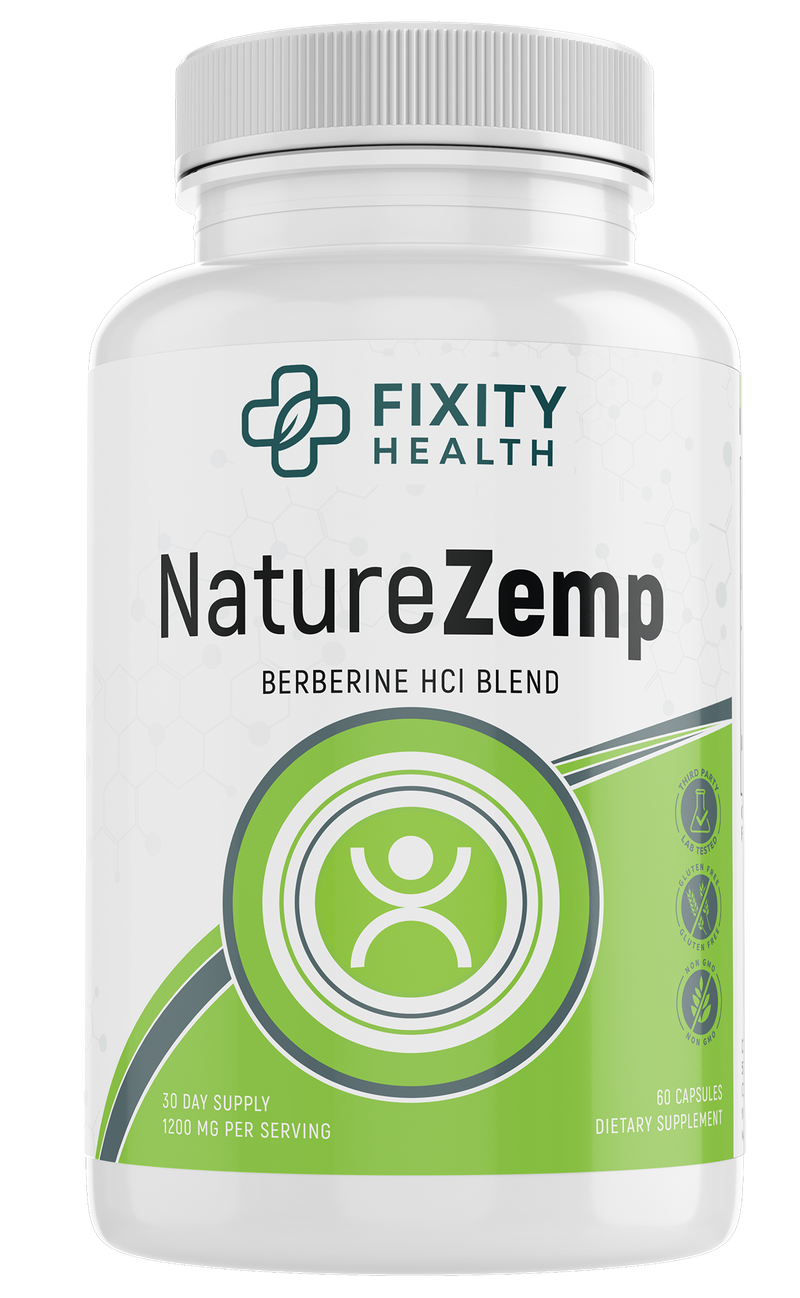
Your Offer
NatureZemp — 600mg Pure Berberine HCl
Clinical dose. Made in USA. GMP-certified. Third-party tested.
MONTHLY SUBSCRIPTION — BEST VALUE
A fresh 30-day bottle ships to your door every month. No re-ordering. No "did I run out?" panic. Shows up like clockwork. Cancel in 30 seconds from your phone.
Start My $39/Month Subscription ▸ONE-TIME ORDER
Single 30-day bottle. No subscription. Good for trying before you commit.
Order One Bottle — $58.95 ▸Do the Ozempic math:
- Ozempic: ~$1,300 per month × 12 = $15,600 per year
- NatureZemp monthly subscription: $39 × 12 = $468 per year
- You save $15,132 per year. That's a family vacation. That's a used truck. That's the grandkids' Christmas.
Why Subscribe
Here's the honest answer: the peer-reviewed studies that matched berberine to metformin ran 90 to 180 days. The AMPK switch doesn't flip in a week. It resets over months. Your body has to relearn a pattern it forgot somewhere around age 45.
Subscribing isn't a marketing trick. It's the protocol that actually works. That's why we priced it the way we did — so the people who benefit most (you) don't fall off the protocol in month two because they forgot to reorder.
Cancel anytime. Free shipping every month. $39 flat.
The 60-Day Return Policy — No Games

Try NatureZemp for a full 60 days. If your morning blood sugar isn't coming down, if your energy isn't climbing, if your pants aren't fitting better, if you just don't like the way the bottle looks on your counter — send back whatever's left. Even if the bottles are empty. We will refund every dollar you paid.
No form to fill out. No argument. No "restocking fee." No "customer retention specialist" calling to guilt you.
Either this works for you, or you don't pay.
Free With Your First Order — The $93 Bonus Stack
Three Free PDF Guides — Delivered Instantly
Order NatureZemp today (subscription or one-time) and you will get all three of the following guides emailed to you within five minutes of checkout. These are not filler — they are the exact protocols we give to new customers to make sure the capsule actually works as hard as it can.
A 47-page field guide to reading food labels, timing your meals, and dodging the hidden carb traps hiding in "healthy" grocery aisles. The guide every nurse I know wishes her patients had read before the diagnosis. ($47 value.)
Exactly how to take NatureZemp for maximum absorption, what to eat alongside it, what to track in the first seven days, and which two common breakfasts will cancel out your first week of progress. ($27 value.)
The sneaky offenders hiding in "healthy" marketing claims — including three foods your cardiologist probably told you to eat more of that are quietly sabotaging your A1C. ($19 value.)
Total free bonus value: $93.
Included with every order — including the one-time bottle.
One More Thing Before You Decide
Our manufacturer raised raw berberine costs 14% last quarter. We've absorbed the difference so far because we believe this compound should be affordable for the Americans who need it most — retirees, veterans, folks on fixed incomes who've already been bled dry by a healthcare system that failed them.
But inventory on our current pricing is limited. The $39/month subscription rate is locked for every customer who starts today. If we're forced to raise prices in 2026, you'll be grandfathered at today's rate as long as your subscription stays active.
About Our Current Batch
Here is the operational truth — because I would rather over-explain than over-promise. We produce NatureZemp in batches of 10,000 bottles every eight weeks. The current batch hit our warehouse March 1st. At our current subscription enrollment rate, we are projecting this batch sells out somewhere between May 12 and May 18. The next batch is already scheduled, but it will cost us 14% more to produce due to continued pressure on berberine sourcing.
What that means for you: if you subscribe before the current batch sells out, your rate is locked at $39/month for life. New subscribers after the sellout will start at a higher rate. That is not a scarcity gimmick — it is how our supply chain actually runs. Check the date on this letter, do the math, and decide.
If you're on the fence, the fence is about to get more expensive to sit on.
Click the button below. Choose the subscription if you're serious, the one-time if you want to test the waters. Either way, you'll have NatureZemp in your hands inside a week — and if the studies hold, a very different reading at your next doctor's appointment.
Frequently Asked Questions
Q: When will I feel it working?
Most customers report the first shift in energy and the disappearance of the 3 p.m. crash within 10-14 days. Fasting glucose typically starts moving by week 2-3. The A1C number that matters to your doctor takes the full 90 days to reflect the change, because it is a 90-day rolling average. The studies were built on 90 days. Plan accordingly.
Q: How do I take it — with meals or without?
Best results: one 600mg capsule 30 minutes before your two largest meals of the day (usually lunch and dinner). Taking it before the meal lets the AMPK activation front-run the glucose spike from the food. If you forget, taking it with the meal still works — just slightly less efficiently.
Q: Can I take it with my other medications?
NatureZemp is generally safe alongside most common medications, but you should have the conversation with your doctor before stacking anything. Specific notes: (1) Metformin — works well together, but watch for over-correction; may need dose adjustment. (2) Ozempic / Wegovy / Mounjaro — generally compatible, though many customers transition off the injection over time. (3) Statins — berberine independently lowers LDL, which can be a bonus or a reason to recheck your statin dose with your doctor. (4) Blood pressure meds — generally compatible. Always tell your physician what you are taking.
Q: Is it safe for long-term use?
Berberine has been used continuously for 2,500 years without documented long-term toxicity when used at recommended doses. Modern pharmacokinetic studies show no cumulative organ strain at the clinical dose. Compare that to 10+ years on metformin (B12 deficiency), statins (muscle loss), or Ozempic (pancreatic concerns still under active investigation). Few compounds have a cleaner long-term safety profile.
Q: Does it interact with diabetic medications?
Yes — in the helpful direction, most of the time. If you are on metformin, glipizide, insulin, or a GLP-1 agonist, adding NatureZemp can enhance the blood sugar lowering effect, which can mean your existing medication dose needs to come down. This is a good conversation to have with your doctor. Do not stop any prescription on your own.
Q: Will I have to stay on it forever?
Honest answer: most customers choose to stay on it indefinitely because the metabolic benefits compound over time. But some customers use NatureZemp to reverse pre-diabetes and then transition to a lower maintenance dose. There is no physical dependence. You can stop any time.
Q: Is the 60-day guarantee really no questions asked?
Yes. Really. Empty bottles are fine. Partial bottles are fine. Send them back, we refund every dollar you paid — including shipping on the one-time order. No retention calls, no pressure, no paperwork maze. That is the deal. I put it in writing because I mean it.
Q: What's the difference between Berberine HCl and Berberine Phytosome?
Berberine HCl (what is in NatureZemp) is the form used in 95% of the peer-reviewed clinical studies, including the 2008 metformin head-to-head trial. Phytosome is a newer, higher-absorption format — but it is also more expensive and has a much thinner evidence base. We deliberately stuck with the clinically-proven HCl form because we want results you can check against published trials, not marketing claims.
Q: Who shouldn't take NatureZemp?
Pregnant or nursing women should not take berberine — no large safety data in pregnancy. Children under 18 should not take it without pediatric supervision. If you are on an immunosuppressant like cyclosporine or tacrolimus, berberine can alter the metabolism of those drugs — talk to your specialist first. Anyone on cancer chemotherapy should check with their oncologist.
Q: Where is it manufactured?
NatureZemp is manufactured in an FDA-registered, Good Manufacturing Practice (GMP)-certified facility in the United States. Every single batch is third-party tested for purity, potency, and heavy metals. We do not source finished product from overseas. Period.
To your health,
Mark Edwards
Founder, Fixity Health
Orlando, Florida
P.S. #1 — If you take only one sentence from this letter, take this one: Metformin activates AMPK. Berberine activates AMPK. One requires a doctor, a prescription, and a pharmacy. The other has been growing in the ground for 2,500 years. You've been told the problem is sugar. The problem was never sugar. The problem was the switch.
P.S. #2 — The metformin-vs-berberine head-to-head study was published in 2008. That's eighteen years ago. In those eighteen years, the pharmaceutical industry has spent an estimated $6.7 billion marketing Ozempic, Wegovy, and Mounjaro — and roughly $0 telling Americans about a peer-reviewed natural compound that matches their results. Ask yourself why.
P.S. #3 — If you are currently on metformin, Ozempic, or any other blood sugar medication, do not stop taking it without talking to your doctor. Bring a bottle of NatureZemp to your next appointment and have the conversation — a real one, longer than four minutes. You deserve that conversation. You always did.
P.S. #4 — My father Tom Edwards never got this letter. He never got the option. He died on eleven medications that were supposed to save him. You are reading this because somebody in your life loves you enough to want a different ending. Do not waste that. Subscribe today while the current batch is still available and the $39 rate is still locked — and let's get you your life back.
P.S. #5 — The three bonus PDFs ($93 value) ship the second you click the button. Even if you only order one bottle. Even if you end up sending it back empty on day 59 for a full refund. The guides are yours to keep either way. That is how confident we are that once you actually follow the protocol, you will not want to send anything back at all.